The Main Culprits of Pool Energy Loss
Energy efficient pools are one of the smartest investments a Houston homeowner can make — and the savings start from day one.
If you’re looking for quick wins, here’s a snapshot of the most effective ways to cut pool energy costs:
| Strategy | Potential Savings |
|---|---|
| Switch to a variable-speed pump | Up to 90% on pump energy (~$445/year) |
| Install an automatic pool cover | Up to 70% reduction in heating costs |
| Upgrade to LED pool lighting | Up to 80% savings on lighting energy |
| Use a heat pump instead of gas | Up to 50% more efficient than gas heaters |
| Lower pool temp by a few degrees | Save 10–30% per degree on heating costs |
| Add windbreaks and landscaping | Noticeably reduces evaporation heat loss |
Now, here’s the honest truth most people don’t realize until they’ve owned a pool for a season or two:
A backyard pool is one of the greatest joys a Houston family can have — but it can quietly become one of the biggest line items on your electricity bill.
Pool pumps alone can cost over $1,000 a year to run on a standard single-speed setup. Add heating, lighting, and filtration, and your pool can easily become the second-highest energy consumer in your home. That’s before summer even peaks.
The good news? Most of that cost is preventable. Whether you’re building a new pool or looking to get more out of the one you already have, there are proven strategies — some as simple as adjusting your thermostat or throwing on a cover — that can dramatically shrink your monthly bills without shrinking your enjoyment.
In this guide, we’ll walk you through exactly where your pool loses energy, which upgrades deliver the best return, and what low-cost habits can make a real difference starting today.
Quick look at energy efficient pools:
- custom spa construction
- outdoor kitchen pool
- outdoor living Houston
Understanding how energy efficient pools work starts with knowing where the energy is going in the first place. In a sunny, humid environment like Houston, you might think the heat is your friend, but it actually contributes to several types of energy loss.
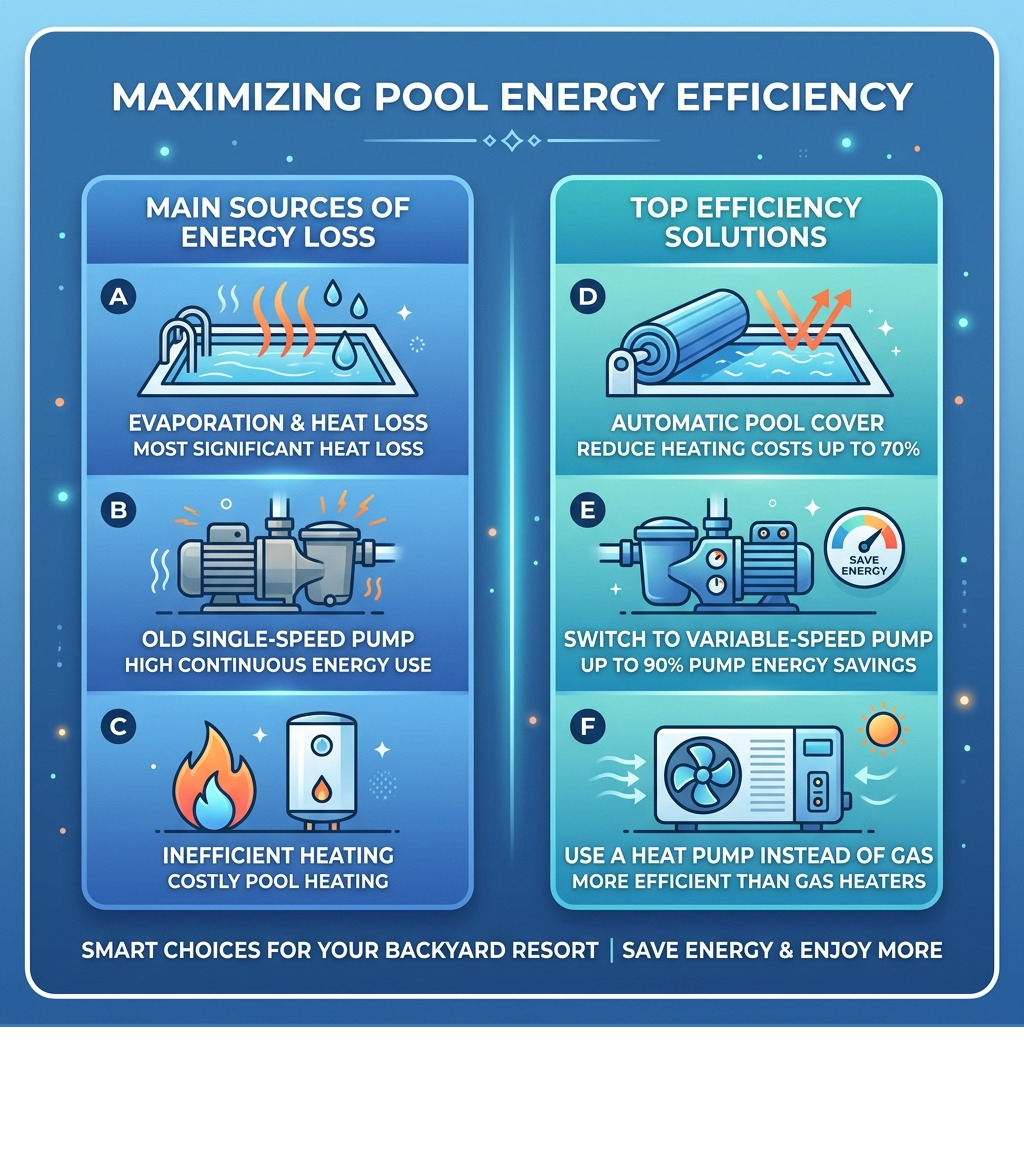
The big three are evaporation, wind, and convection. While conduction (heat loss through the pool floor and walls) exists, it’s actually considered negligible compared to what’s happening at the surface. Most pool energy loss—up to 70% or more—happens right at the top of the water.
Why Evaporation is Your Biggest Enemy
Evaporation is the single largest cause of energy loss for any swimming pool. When water turns into vapor, it takes a massive amount of heat with it. For every gallon of water that evaporates, thousands of BTUs of heat energy vanish into the Houston air.
Because Houston is a flat area, wind can easily sweep across your backyard, rippling the water surface. This increases the surface area and strips away the thin layer of warm, moist air sitting just above the water, which speeds up evaporation significantly. This is why California’s Quest for Energy Efficient Swimming Pools and similar national standards place such a high priority on pool covers and windbreaks. By blocking the wind and sealing the surface, you keep that expensive heat exactly where it belongs: in the water.
Upgrading to Energy Efficient Pools with Variable-Speed Pumps
If you’re looking for the “Holy Grail” of pool savings, look no further than your pump. For years, most pools in Texas were built with single-speed pumps. These are like a light switch—they’re either 100% on or 100% off. Running a single-speed pump is like driving your car with the gas pedal floored at all times; it’s loud, it’s expensive, and it’s overkill for simple filtration.

Switching to a variable-speed pump is arguably the best move you can make for The Best Energy Efficient Equipment For Your Pool Remodel. These pumps use permanent magnet motors (similar to those in electric cars) and allow you to dial in the exact speed needed for the task. Since July 2021, DOE regulations have actually made many older, inefficient single-speed pumps non-compliant for new installations because they simply waste too much power.
Comparing Single-Speed vs. Variable-Speed Performance
The math behind variable-speed pumps is pretty incredible. Because of “pump affinity laws,” if you cut the pump speed in half, you don’t just cut the power use in half—you actually reduce it by about 87%.
| Feature | Single-Speed Pump | Variable-Speed Pump |
|---|---|---|
| Annual Electricity Cost | $1,000+ | $100 – $150 |
| Noise Level | Loud hum (like a vacuum) | Whisper quiet |
| Energy Reduction | 0% (Baseline) | Up to 90% |
| Longevity | 5-7 years | 10-12 years |
| Control | On/Off only | Fully programmable RPMs |
By running the pump longer at a lower RPM, you get better filtration, quieter operation, and a significantly lower electricity bill. U.S. Department of Energy data shows that switching can save you up to $445 every single year.
Smart Heating and Lighting Strategies for Houston
Heating a pool in Houston is usually about extending the season into those beautiful spring and fall months. However, how you heat matters. Traditional gas heaters are like “muscle cars”—they get the water hot very fast, but they burn through fuel quickly.
For energy efficient pools, we often recommend heat pump pool heaters. These don’t “create” heat; they extract it from the ambient air and move it into the water. As long as the temperature is above 50°F, they are incredibly efficient. According to the Heat Pump Swimming Pool Heaters | Department of Energy, these units are up to 50% more efficient than gas heaters and can save you roughly $400 a year in energy costs.
Maximizing Solar Power for Energy Efficient Pools
We get plenty of sunshine in places like Katy, Sugar Land, and Cypress. Solar pool heating systems use that free energy by pumping water through collectors (usually mounted on your roof) where the sun warms it up. While the upfront cost is higher than a gas heater, the “fuel” is 100% free. In our climate, a well-sized solar system can reduce your heating costs by up to 80%.
The Impact of Temperature on Your Monthly Bill
Here is a southern-friendly tip that costs zero dollars: watch your thermostat. The American Red Cross recommends 78°F for competitive swimming, while most families prefer 80°F to 82°F.
Every single degree you raise the temperature adds 10% to 30% to your heating bill. If you aren’t using the pool for a few days, turn the heater down or off. It’s a total myth that it takes more energy to “reheat” the pool than it does to keep it hot constantly. If you’re worried about winter, knowing How To Prevent Pool Freezing In 5 Simple Steps can save you from emergency energy spikes and equipment damage.
Low-Cost Habits and Maintenance for Maximum Savings
You don’t always need to buy new equipment to see a change in your bill. Some of the best ways to maintain energy efficient pools involve simple backyard management.
- Landscaping as a Windbreak: Since Houston is flat, wind is a major factor. Planting native, non-deciduous hedges or installing a decorative fence can create a “micro-climate” around your pool, shielding the surface and cutting heat loss.
- Clean Filters: A dirty filter makes your pump work harder. By keeping your filtration system clear, you maintain high hydraulic efficiency, which keeps your energy use low.
- Water Chemistry: Balanced water doesn’t just keep the pool pretty; it protects your expensive energy-efficient heaters from corrosion. Learn How To Keep Your Custom Pool Looking Brand New Year After Year to ensure your upgrades last for a decade or more.
The Role of Automation in Energy Efficient Pools
Modern pool automation is a game-changer. These systems allow you to schedule your pump to run during “off-peak” hours when electricity rates are lower. You can also control your heater, lights, and cleaners from your smartphone. Automation ensures that nothing runs longer than it needs to, preventing that “oops, I left the heater on all night” moment.
Simple Design Tweaks for New Builds
If you’re just starting your journey with us at Ocean Blue Pools, we can bake efficiency right into the design.
- Darker Finishes: Choosing a darker plaster or pebble finish helps the water absorb more solar energy naturally, acting like a giant battery.
- Plumbing Layout: Using wider pipes and fewer 90-degree turns reduces “head loss,” meaning your pump doesn’t have to push as hard to move the same amount of water.
Frequently Asked Questions about Pool Efficiency
What is the most economical way to heat a pool?
For most Houston homeowners, a combination is best. Solar heating is the cheapest to operate because the energy is free. However, for consistent year-round use, a high-efficiency heat pump is the most economical mechanical option, especially when paired with a pool cover.
How much can I save by switching to LED lights?
LED pool lights use about 80% less energy than traditional incandescent bulbs. While a standard bulb might use 300-500 watts, an LED equivalent uses only about 30-50 watts. Plus, they last about 10 times longer, meaning fewer expensive underwater bulb changes!
Do pool covers really make a difference?
Absolutely. An automatic pool cover is the single most effective tool for heat retention. It can reduce heating energy consumption by up to 70% and cut water evaporation by 95%. It also keeps debris out, which means your robotic cleaner and pump don’t have to work as hard.
Start Your Journey Toward a More Efficient Backyard
At Ocean Blue Pools, we’ve spent over 25 years building more than just swimming pools; we build backyard retreats that fit your lifestyle and your budget. We know that a pool should be a source of relaxation, not a source of financial stress.
Whether you’re in The Woodlands, Richmond, or right here in Houston, our team is dedicated to top-tier craftsmanship and transparent, southern-friendly service. We’ll help you navigate the latest in energy efficient pools technology to ensure your dream backyard stays affordable for years to come.
Ready to transform your home with a pool that works for you? Let’s design your dream backyard together.