Don’t Let a Houston Cold Snap Wreck Your Pool
Pool freeze protection is critical for Houston homeowners when temperatures drop unexpectedly. Here’s what you need to do immediately:
- Keep your pump running 24/7 when temps fall below 40°F
- Open all valves to ensure water flows through all equipment
- Maintain water level at mid-skimmer for proper circulation
- If you lose power, shut off breakers and drain all equipment plugs
- Never drain your pool — this can cause structural damage
We’ve all heard the stories from our neighbors after a rare Houston freeze. One day it’s 70 degrees, the next morning ice is forming on your pool surface. While freezing temperatures aren’t common here, when they hit, they can cause serious damage fast.
The good news? You don’t need to be a pool expert to protect your investment.
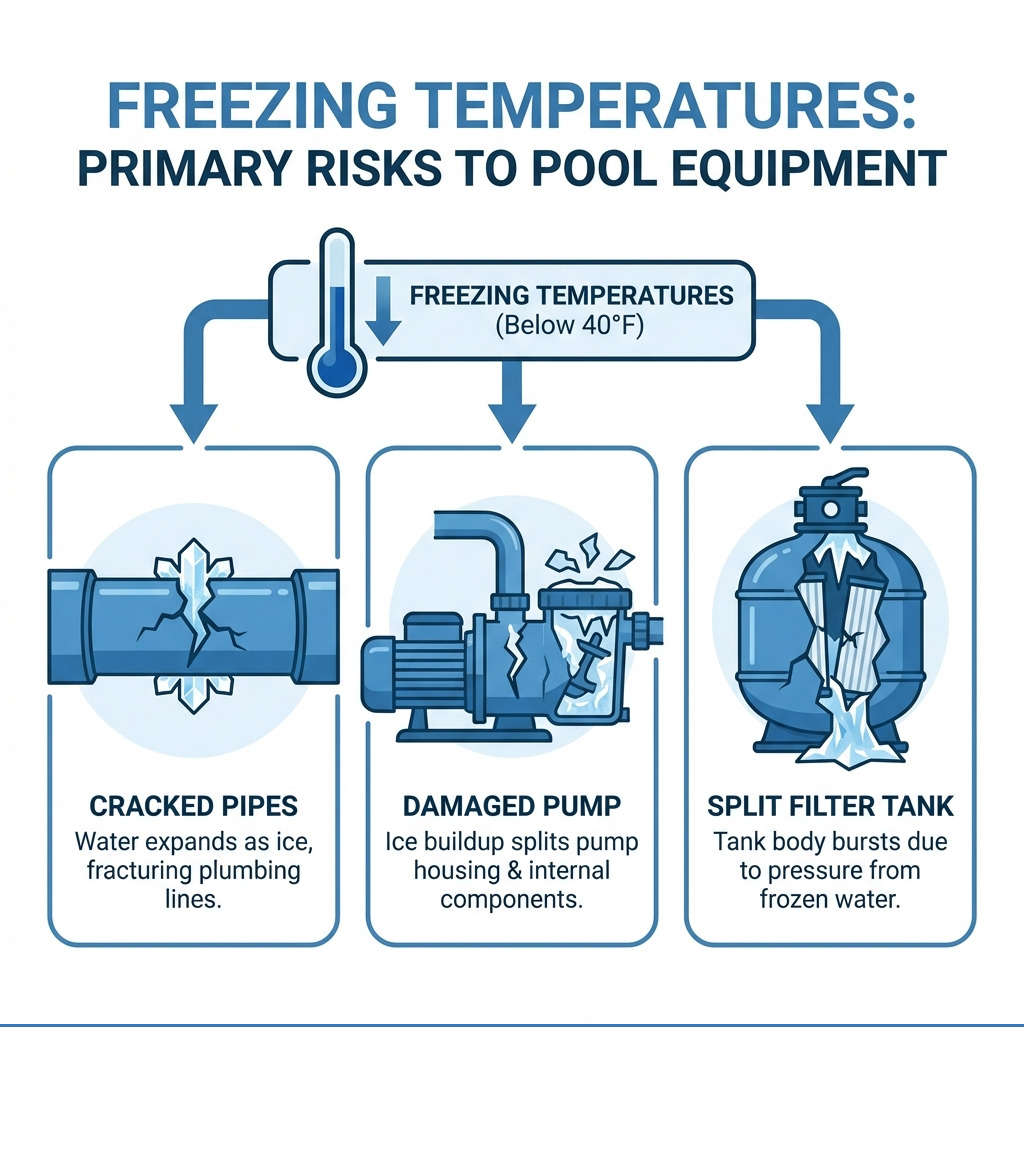
Pool equipment like your pump, filter, heater, and pipes are vulnerable to freezing because water expands when it turns to ice. That expansion can crack PVC pipes, split pump housings, and burst heater coils. Repair costs typically range from $200 for minor fixes to several thousand dollars for extensive damage.
But here’s the thing — moving water doesn’t freeze easily. That simple fact is the foundation of effective freeze protection. As long as water keeps circulating through your plumbing and equipment, you’re already doing the most important thing to prevent damage.
In this guide, we’ll walk you through five straightforward steps to protect your pool during a Houston cold snap, what to do if the power goes out, and how to handle equipment that’s already frozen.
The #1 Rule for Pool Freeze Protection: Keep Your Water Moving
When cold weather makes its way to Greater Houston, the most effective way to prevent costly freeze damage to your pool equipment is simple: keep the water moving. It’s a bit like a river; it’s much harder for a flowing river to freeze solid than a still pond. Our pools operate on the same principle!
Freezing temperatures pose a significant threat to your pool’s intricate system of pumps, filters, heaters, and plumbing. When water freezes, it expands with incredible force. This expansion can crack pipes, split the housing of your pump, damage your filter tank, and even burst the delicate coils within your heater. These repairs can quickly add up, often ranging from a few hundred dollars for a minor pipe crack to several thousand for extensive equipment replacement.
The primary goal of pool freeze protection is to prevent water from becoming stagnant in any part of your system. By continuously circulating the water, we keep it from reaching the point where it can freeze and cause damage. This is especially important in areas like Houston, where we might not fully winterize our pools, but still face occasional, unexpected cold snaps.
For those of us who appreciate the latest innovations in pool care, modern solutions like automatic freeze protectors and energy-efficient variable-speed pumps make this task even easier. We’re always looking for ways to make your pool maintenance simpler and more effective. You can learn more about how smart equipment can benefit your pool in our article on The Best Energy Efficient Equipment for Your Pool Remodel.
How Automatic Freeze Protectors Work
Imagine having a vigilant guardian watching over your pool equipment, ready to spring into action the moment temperatures drop. That’s exactly what an automatic freeze protector does for your pool. These clever devices are equipped with temperature sensors that constantly monitor the ambient air temperature around your pool equipment.
When the temperature falls to a pre-set point, usually around 34 to 40 degrees Fahrenheit, the freeze protector automatically activates your pool pump. Some advanced systems will even turn on your pool heater to further warm the circulating water. This ensures that water continues to flow through all your plumbing and equipment, preventing it from freezing solid. It’s truly a wonderful way to gain peace of mind, knowing your investment is protected even when you’re not able to manually monitor the weather. Many of our clients in Houston, Katy, and Sugar Land find these systems invaluable for their pool freeze protection. You can find more information on general Pool Freeze Protection solutions from leading manufacturers.
Using a Variable-Speed Pump for Pool Freeze Protection
If you’re looking for an energy-smart approach to pool freeze protection, a variable-speed pump is an excellent choice. Unlike older, single-speed pumps that run at full power all the time, variable-speed pumps allow you to adjust the flow rate. This means they can run continuously at a lower, more energy-efficient speed, which is ideal for maintaining circulation during colder months without racking up high electricity bills.
When freezing temperatures are forecast, you can simply set your variable-speed pump to run 24/7 at a medium or even low speed. This constant, gentle circulation is often enough to prevent water from freezing in your pipes and equipment. If you already have one installed, you can simply adjust its settings. For example, some modern pumps like the Hayward VS900 and VS950 allow you to adjust schedules and speeds directly through a mobile app. This flexibility offers superior protection and significant energy savings compared to traditional pumps, making them a popular choice for homeowners across Cypress, Tomball, and Magnolia.
Your 5-Step Freeze Protection Checklist
Protecting your pool from a sudden cold snap doesn’t have to be complicated. Here in the Greater Houston area, we’ve developed a straightforward, 5-step checklist to help you stay ahead of the weather and safeguard your backyard oasis.
Step 1: Keep an Eye on the Forecast
We know Houston weather can be a bit unpredictable, but keeping a close watch on the forecast is your first line of defense for pool freeze protection. When temperatures are expected to dip below 40-45 degrees Fahrenheit, it’s time to activate your freeze protection plan. This threshold is often when automatic freeze protection devices kick in, but it’s always wise to be proactive. Sign up for local weather alerts that can notify you of freeze warnings in your specific area, whether you’re in Spring, Richmond, or Conroe. Being prepared means you can take action before the cold truly sets in.
Step 2: Maintain Proper Water Level & Chemistry
A crucial aspect of pool freeze protection is maintaining the correct water level. We always recommend keeping your water level at exactly mid-skimmer. Why is this so important? If the water level drops too low, your skimmers can run dry, causing your pump to lose its prime. When the pump loses prime, water stops circulating, leaving your plumbing vulnerable to freezing and potential damage.
Beyond the water level, proper water chemistry also plays a role, especially if your pool remains operational through the cooler months. While chemistry doesn’t directly prevent freezing, balanced water helps prevent other issues that could complicate freeze protection. For instance, if you’re preparing for a storm or potential power outage, shocking your pool and adding algaecide about 24 hours beforehand can help maintain water balance even if your equipment is down for a few days. This keeps your water healthy and ready for when circulation resumes.
Step 3: Keep it Clean and Clear
A clean pool isn’t just a pretty pool; it’s a protected pool when freezing temperatures loom. Your skimmer baskets and main drains are the unsung heroes of your pool’s circulation system, constantly working to pull water through your pump and filter. If these areas become clogged with leaves, debris, or other blockages, they can restrict water flow. This means your pump won’t be able to move enough water through the system, creating stagnant spots where freezing can occur.
During a cold snap, we encourage you to check and clean your skimmer baskets daily. A clear pathway for water is essential to ensure continuous circulation, which, as we’ve learned, is the cornerstone of effective pool freeze protection. This simple step can make a big difference in preventing damage to your equipment.
Step 4: Open All Valves and Protect Skimmers
Ensuring full water circulation throughout your entire pool system is paramount for pool freeze protection. A common mistake is to close off certain lines. We recommend setting all valves to “OPEN” (or “FILTER” if that’s your system’s equivalent for full circulation). This includes valves for your skimmers, main drains, vacuum lines, returns, and any water features like spa jets or fountains. The goal is to keep water moving everywhere to prevent cold spots where ice can form. If you have a separate booster pump for features like waterfalls or spas, make sure those are running too, or prepare to drain them if continuous operation isn’t feasible.
Your pool skimmer, often made of thin PVC, is particularly vulnerable to cracking if ice forms inside it. Here’s a clever trick we share with our neighbors in Fort Bend County: create a “skimmer bottle.” Take an empty plastic water bottle, fill it about one-third full with swimming pool antifreeze (never automotive antifreeze!), screw the cap on tightly, and drop it into your skimmer. This bottle acts as a pressure absorber, compressing as ice expands around it and protecting the skimmer walls from cracking.
Step 5: Use a Pool Cover
While continuous water circulation is your primary defense, a good pool cover offers an extra layer of pool freeze protection by helping to retain heat. Think of it like putting a lid on a pot of water; it helps the water warm up faster and keeps that warmth from escaping.
Solar covers are particularly effective for this purpose, as they actively trap heat from the sun and transfer it to your pool water, helping to keep the overall water temperature higher. Even a simple winter cover can provide insulation and prevent the surface from freezing as quickly. Beyond heat retention, covers also keep out debris, which ties back into Step 3 about maintaining clear skimmers and drains. For those with automatic covers, remember to keep them pumped off to avoid an ice sheet forming on top, and avoid opening them when the pool surface is frozen.
What to Do When the Power Goes Out: An Emergency Guide
A power outage during freezing weather is a pool owner’s biggest nightmare, especially here in the Greater Houston area. Without power, your pump can’t run, and that crucial water circulation stops. This leaves your entire pool system highly susceptible to freeze damage. But don’t panic! We have a clear emergency plan to help you protect your investment.
The moment you realize the power is out and temperatures are dropping below freezing, immediate action is required. Your goal is to drain any standing water from your equipment and plumbing lines to create space for expansion if freezing does occur. This can prevent costly cracks and bursts. Here’s a helpful video that walks you through this process: Freeze Protecting Pool In Power Outage.
Draining Your Pump, Filter, and Heater
The first and most critical step during a power outage is to remove all drain plugs from your pool equipment. We’ll walk you through where to find them:
- Pool Pump: You’ll typically find two drain plugs on your pump: one on the pump pot (the basket housing) and another on the volute (the main body of the pump). Unscrew both of these.
- Filter: Your filter will usually have one drain plug at the bottom. Open the air relief valve on top of the filter as well to help it drain faster.
- Heater: Look for two drain plugs on your heater, often located on the manifold. Remove these.
- Chlorinator: If you have an inline chlorinator, open it to allow any water to drain out.
- Salt Cell: For saltwater pools, if possible, unplug and remove your salt chlorine generator cell and drain any water from it.
Before you start, make sure to turn off all circuit breakers to your pool equipment pad. This prevents any equipment from unexpectedly turning back on if power is briefly restored while you’re working, which could cause significant damage. Once the plugs are out, let gravity do its work and allow the water to drain completely from these components.
Insulating and Covering Your Equipment
After you’ve drained your equipment, the next step is to provide some physical protection, especially to exposed pipes. Even with water drained, residual moisture or unexpected accumulation can still freeze.
- Cover Equipment: Drape heavy blankets, old towels, or even tarps over your pump, filter, and heater. This acts as an insulating layer, helping to slow down the freezing process and offer some protection from direct cold.
- Protect Exposed Pipes: Pay special attention to any above-ground PVC plumbing lines. You can wrap these with towels, old clothes, or even pool noodles to provide insulation. Specialized heating cables are also an option for more permanent protection.
- Remove Skimmers (if possible): If your skimmer can be easily removed, drain it and store it in a warm indoor area. If not, consider using the “skimmer bottle” trick we mentioned earlier.
The goal is to buy time and minimize damage until power is restored or professional help can arrive. These steps are crucial for mitigating the risks of a severe freeze, particularly in areas like Montgomery County and Klein where winter storms can bring unexpected challenges.
Uh-Oh, It Froze. Now What?
Despite our best efforts, sometimes nature has other plans, and you might find that your pool equipment has frozen. Don’t despair, but do act cautiously and methodically. Recognizing the signs of frozen equipment is the first step. You might notice no water flow, visible ice inside clear pump lids or filter pressure gauges, or even strange noises from your equipment pad. If you suspect freezing, it’s time to take action. This is where our commitment to Quality Pool Construction truly shines, as well-built systems often offer more resilience, but no system is entirely impervious to extreme conditions.
How to Safely Thaw Frozen Equipment
If you find your pool equipment has frozen, the most important rule is: patience is key, and never force it. Here’s how to safely approach thawing:
- Shut Off All Power: Immediately turn off all circuit breakers leading to your pool equipment. This is non-negotiable to prevent damage if the pump tries to start while frozen.
- Gentle Heat Application: The safest way to thaw is slowly and gently.
- Blankets and Tarps: Cover the frozen equipment with heavy blankets and then a tarp to create a small “tent” around it.
- Small Space Heater: If you have access to a small electric space heater, you can carefully place it inside this tented area, ensuring it’s not directly touching any equipment or flammable materials. Monitor it closely!
- Warm Water (with caution): For specific components like the pump basket, you can carefully pour warm (not boiling!) water into the basket area.
- Allow Natural Thawing: The best approach is to let the equipment thaw naturally as temperatures rise. Do not use open flames, boiling water directly on cold PVC, or try to break ice formations with tools, as this can cause more damage.
- Monitor Closely: Stay with the equipment as it thaws, checking for any visible signs of cracking or leaking.
Inspecting for Damage After a Freeze
Once your equipment has completely thawed, it’s time for a thorough inspection. This is a critical step before you even think about turning the power back on.
- Check for Cracks: Carefully examine all PVC pipes, the pump housing, the filter tank, and the heater. Look for hairline cracks, bulges, or any signs of stress. PVC pipes are particularly susceptible to shattering from ice expansion.
- Test for Leaks: After your visual inspection, if everything looks intact, you can slowly restore power. As the system primes and water begins to circulate, watch closely for any leaks around fittings, seals, and equipment.
- Listen for Unusual Noises: Pay attention to any strange sounds coming from the pump or filter, which could indicate internal damage.
If you find any cracks, leaks, or suspect damage, do not continue to run your system. Shut off the power immediately and contact a pool professional. Attempting to run damaged equipment can lead to further, more extensive problems. We’re here to help our neighbors across Houston, Fulshear, and Sienna with expert repairs and evaluations. If you’re facing freeze damage and are considering a Pool Remodeling, our team is here to help.
Frequently Asked Questions about Protecting Your Pool from a Freeze
We hear a lot of great questions from our clients across Greater Houston about how to best protect their pools from freezing temperatures. Here are some of the most common ones we receive:
Can my saltwater pool freeze?
This is a common question, and the answer is a resounding yes, your saltwater pool can absolutely freeze! While salt in water does lower the freezing point slightly, the concentration in a typical saltwater pool is nowhere near enough to prevent freezing in the kind of cold snaps we see in Houston. The freezing point might drop from 32°F to perhaps 30°F or 28°F, but that’s still well within the range of temperatures that can cause significant damage to your pool equipment. So, please, treat your saltwater pool with the same freeze protection precautions as any other pool. Your equipment, including your salt cell, is just as vulnerable to ice expansion.
What’s the difference between freeze protection and full winterization?
This is an important distinction, especially for our climate here in Houston.
- Freeze Protection: This is what we primarily focus on in the Greater Houston area. It involves taking measures to prevent water in your pool’s plumbing and equipment from freezing during short, intermittent cold snaps, while still keeping your pool operational for most of the year. This includes running your pump, using automatic freeze protectors, and taking emergency steps during power outages. It’s about maintaining a functioning pool through mild winters.
- Full Winterization: This is a comprehensive process typically performed in much colder climates where pools are completely shut down for several months. It involves draining water from all plumbing lines, blowing out pipes with air to remove all water, adding pool-specific antifreeze to remaining water in lines, and covering the pool for the winter. For most of our clients in Harris and Fort Bend Counties, full winterization isn’t necessary, as our winters are generally too mild to warrant a complete shutdown.
How does freezing damage different types of pool equipment?
Water expanding as it freezes is the culprit, and it can wreak havoc on nearly every part of your pool’s circulation system:
- Pumps: The pump housing, especially the volute and pump basket, can crack or split open. Internal components can also be damaged.
- Filters: Both cartridge and D.E. filters can suffer damage. The filter tank itself can crack, and internal grids or cartridges can be compromised. Sand filters can also have their tanks crack.
- Heaters: This is often one of the most expensive components to replace. Water trapped in the heater’s heat exchanger coils can freeze and burst, leading to irreparable damage.
- PVC Pipes and Valves: These are highly susceptible. Ice expansion can cause pipes to crack lengthwise, and internal mechanisms of valves can break, leading to leaks and loss of function.
- Skimmers: As we’ve discussed, the thin PVC walls of skimmer bodies are very prone to cracking if ice forms inside them.
- Chlorinators and Salt Cells: Any water left in these units can freeze and damage their internal components or outer casings.
Essentially, any part of your pool system that holds water is at risk when temperatures drop below freezing.
Keep Your Pool Safe All Winter Long
Here in Greater Houston, we’re fortunate to enjoy our pools for most of the year, but those occasional cold snaps remind us that pool freeze protection is a vital part of pool ownership. Prevention is always easier and more affordable than repair. By following these straightforward steps—keeping that water moving, staying vigilant with weather forecasts, maintaining proper levels, and knowing what to do in an emergency—you can significantly reduce the risk of freeze damage to your cherished backyard oasis.
A well-maintained pool is a protected pool, and our team at Ocean Blue Pools is always here to support you. We believe in providing clear, honest advice, just like a trusted neighbor. If you’ve experienced freeze damage or are considering upgrading your system to include better freeze protection, we’re here to help. Our expertise in custom pool building extends to ensuring your pool remains a source of joy and relaxation, no matter the season.
If you’re facing freeze damage and are considering a Pool Remodeling, our team is here to help. Let’s make sure your pool stays beautiful and functional for many years to come.