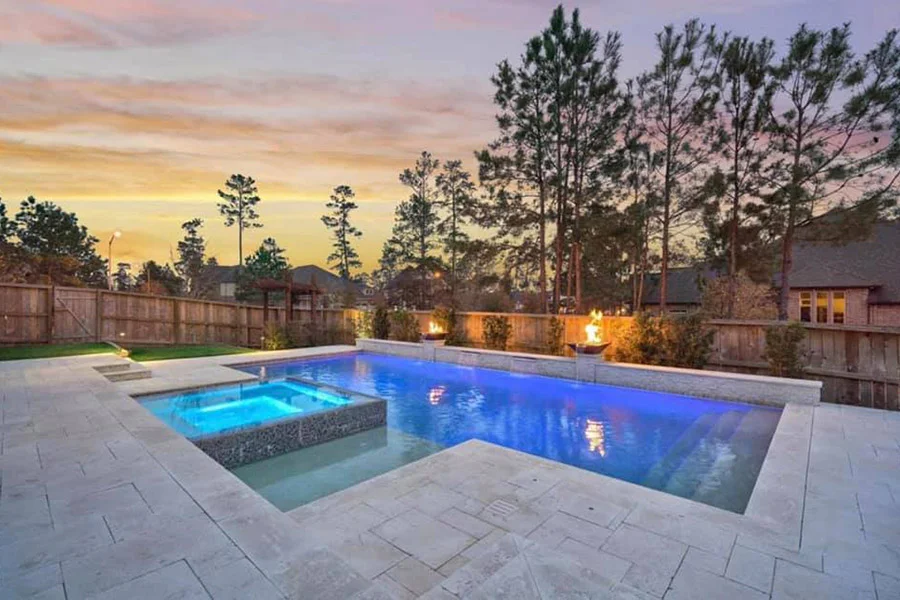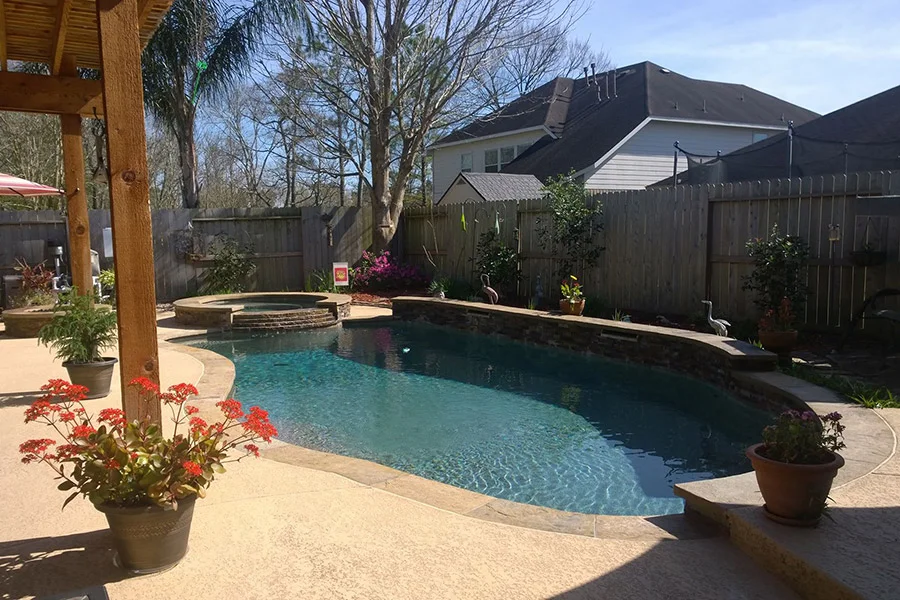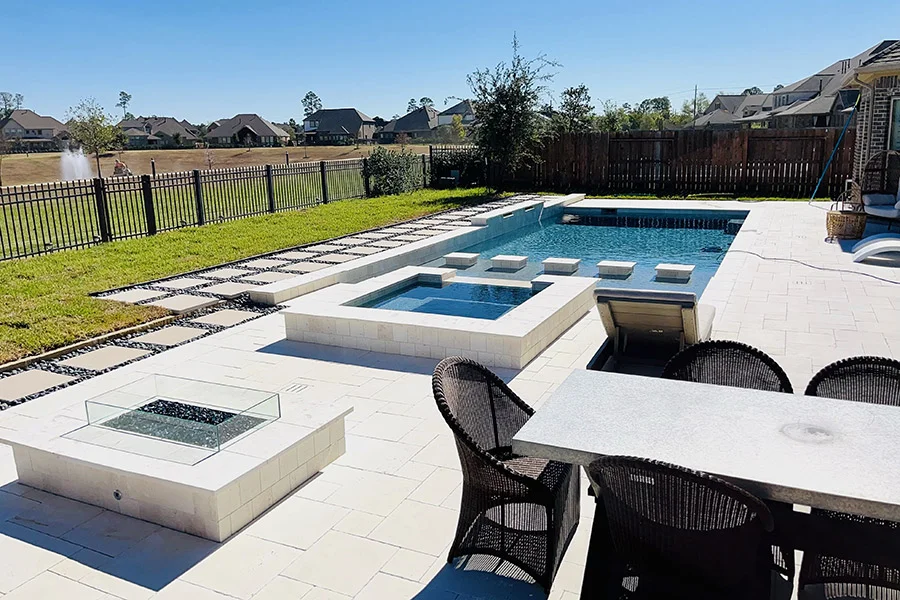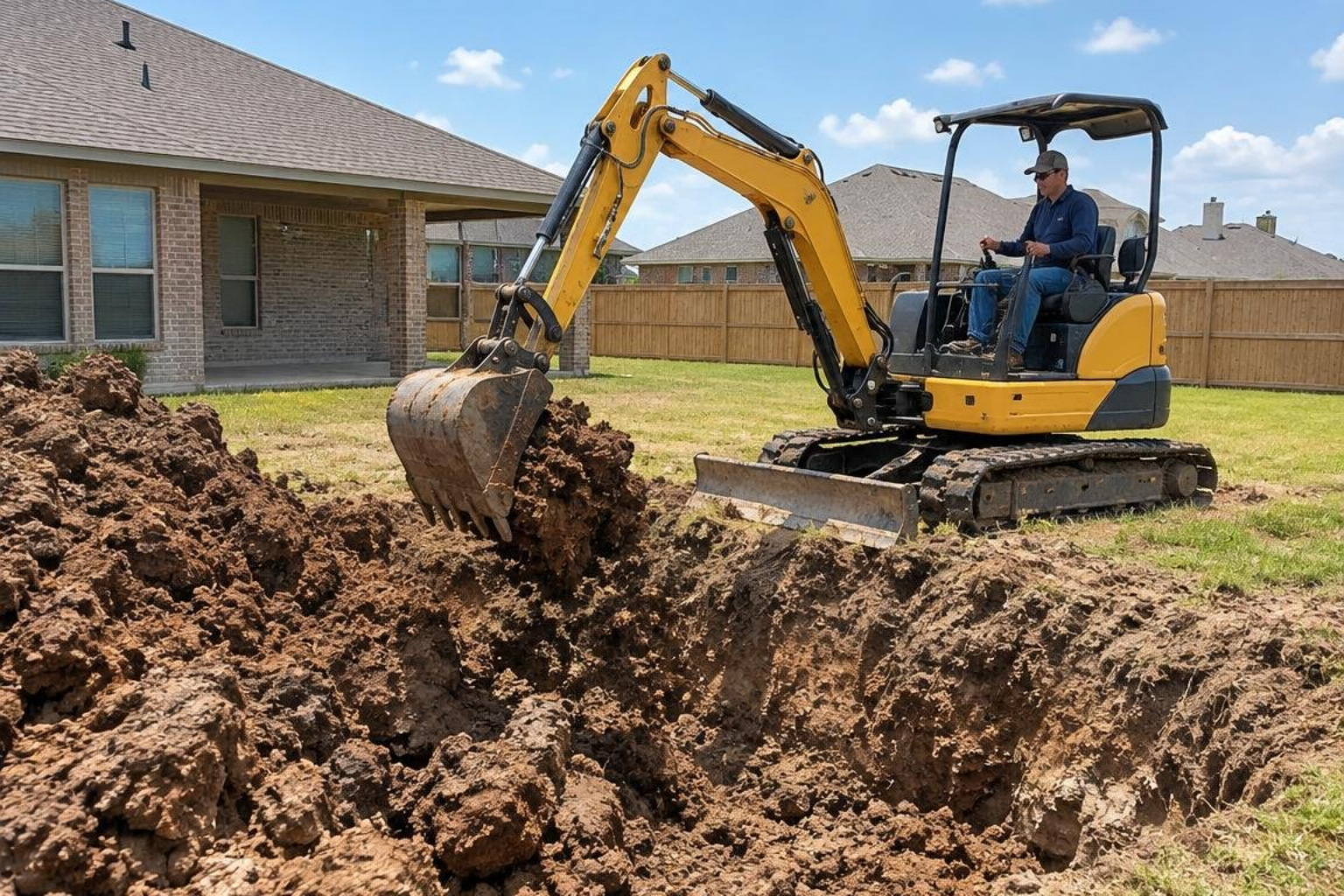
Your Old Pool Doesn’t Have to Stay That Way
Old pool renovation is one of the smartest investments a Houston homeowner can make — and it’s more achievable than most people think.
Here’s a quick look at what you need to know:
| Question | Quick Answer |
|---|---|
| When should I renovate? | Cracks, rough surfaces, staining, or equipment 10+ years old |
| How long does it take? | 2 weeks to 3 months depending on scope |
| What does it cost? | From ~$10,000 for resurfacing up to $60,000+ for full renovations |
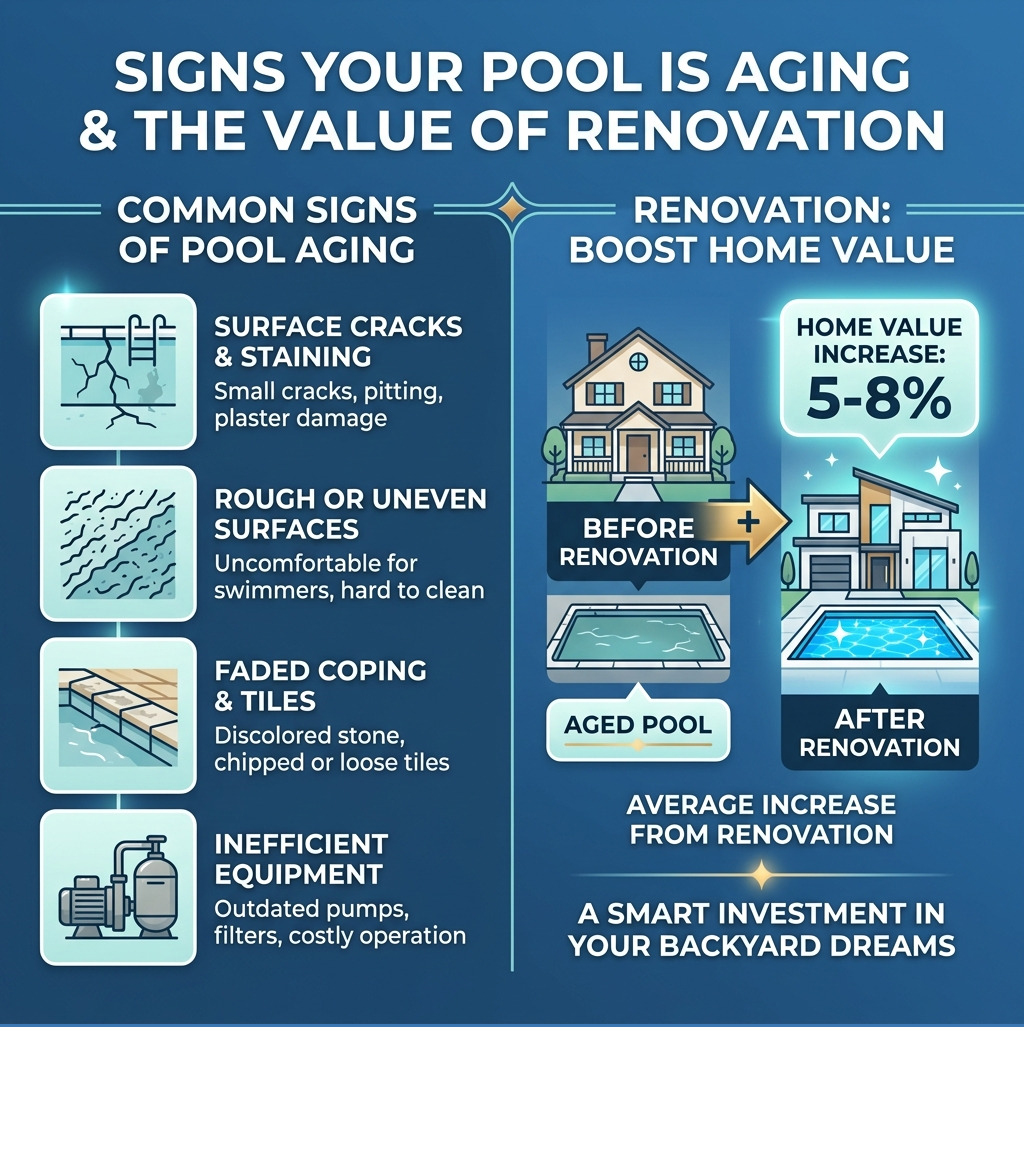
| Does it add home value? | Yes — typically 5–8% increase |
| Renovate or replace? | Renovate if the shell is sound; replace if the design no longer fits your life |
Maybe you moved into a home with a pool that’s seen better days. Maybe your own backyard oasis from the ’90s is starting to look its age — faded coping, rough plaster, and equipment that costs a fortune to run. Either way, you’re not alone.
Over 10 million homes in the United States have pools. A large number of those were built in the 1980s and 1990s — which means a lot of Houston backyards are quietly overdue for a refresh.
The good news? A structurally sound pool shell can almost always be transformed without starting from scratch. New surfaces, modern equipment, and smart design upgrades can turn an embarrassing old pool into the backyard your family actually wants to use.
This guide walks you through everything — from spotting the signs that it’s time to act, to understanding your options, costs, and what the renovation process actually looks like.
Old pool renovation glossary:
Is It Time for an Old Pool Renovation?

Knowing when to pull the trigger on an old pool renovation isn’t always about waiting for a catastrophic failure. Sometimes, your pool “practically shouts” at you that it’s ready for a refresh. In our 25 years serving Greater Houston, we’ve seen that most pools start showing their age through a combination of cosmetic wear and hidden mechanical fatigue.
A major driver for many of our neighbors in Katy or The Woodlands is the realization that their pool has become a “swamp” rather than a sanctuary. The Most Common Problems With Old Pools And How Remodeling Fixes Them often start with surface staining that no amount of scrubbing can fix, or structural cracks that lead to water loss. If you find yourself adding more than an inch of water a week, you aren’t just dealing with Houston evaporation—you likely have a leak.
Signs of Wear in Concrete and Gunite
Concrete and gunite pools are the workhorses of Texas backyards, but even they have a shelf life. The interior plaster usually lasts about 10 to 15 years before it starts to delaminate or “pop off” the shell. You might notice the floor feels like sandpaper on your feet, or you see calcium scaling—those white, crusty deposits—creeping up the walls.
According to How to Update an Old Inground Pool: A Comprehensive Guide to Modernization and Maintenance – ThePoolAndLawn , these signs indicate the protective barrier of your pool is failing. Ignoring these issues can allow water to seep into the concrete shell, potentially rusting the rebar and causing much more expensive structural damage down the line.
When to Replace a Vinyl Liner
If you have a vinyl liner pool, the signs are often even more obvious. Vinyl liners typically have a life cycle of 5 to 9 years. As we move through May 2026, many liners installed during the early 2020s are reaching their limit.
Keep an eye out for:
- Wrinkling or slipping: This suggests the liner is losing its elasticity.
- Tearing: Even small tears near the top can allow water to get behind the liner, washing away the sand base.
- Fading: UV damage from the harsh Texas sun makes the material brittle.
As noted in this guide on Inground Pool Remodel, replacing a liner is like giving your pool a “whole new wardrobe,” but it’s also a critical maintenance step to prevent structural leaks.
Modernizing Your Backyard: High-Impact Upgrades
Once you’ve decided to renovate, the fun part begins. Modern old pool renovation isn’t just about fixing what’s broken; it’s about bringing 2026 technology and style to an older vessel. Everything A Houston Pool Remodeling Specialist Can Do For Your Backyard includes adding aesthetic features that didn’t even exist when many of these pools were first dug.
Resurfacing Options for Your Old Pool Renovation
The finish you choose for your pool’s interior is the single biggest factor in how the water looks and how the surface feels. While traditional white plaster is the budget-friendly classic, it ages the fastest.
| Finish Type | Typical Lifespan | Aesthetic Impact |
|---|---|---|
| Standard Plaster | 7–10 Years | Clean, traditional white |
| Quartz Aggregate | 10–12 Years | Subtle shimmer and better durability |
| Pebble Finishes | 20+ Years | Natural, “lagoon” look; highly stain resistant |
| Glass Tile | 25+ Years | Ultra-luxury; reflects light beautifully |
Pebble finishes, like those mentioned by PebbleTec, have become the “Mercedes” of the industry. They offer incredible longevity and can handle the chemical demands of our long Houston swim seasons much better than plaster.
Energy-Efficient Equipment for an Old Pool Renovation
If your pool equipment sounds like a jet engine taking off every time it turns on, you’re likely wasting hundreds of dollars a month. Modernizing your equipment pad is often the highest-ROI part of a remodel.
The Best Energy Efficient Equipment For Your Pool Remodel focuses on variable-speed pumps. Unlike old single-speed pumps that run at full blast or not at all, variable-speed models can be dialed down to the exact flow needed. This can reduce your energy costs by 50% to 70%—and in some cases up to 90% compared to equipment from the early 2000s. Adding a salt chlorine generator is another popular choice, providing “softer” water that is gentler on the skin and eyes.
Modifying Shape, Depth, and Size
Can you actually change the physical footprint of your pool? Yes! Many homeowners are choosing to “shallow out” their deep ends. An 8-foot deep end is rarely used for anything other than a quick plunge, whereas a 4.5-foot depth is perfect for water volleyball, lounging, and staying cool while standing.
Adding a tanning ledge (or “Baja shelf”) is the #1 request we see in Houston. It creates a shallow area for lounge chairs or a safe splash zone for kids and pets. You can also integrate beach entries or modern water features like sheer descents to give your Pool Remodeling project a contemporary, high-end feel.
The Step-by-Step Renovation Process and Costs
Renovating a pool in Greater Houston requires a specific understanding of our local environment. Our expansive clay soil means that pool shells can shift if they aren’t handled correctly during the draining and “popping” prevention phase. This is why professional project management is so vital.
From Assessment to First Splash
A typical old pool renovation takes between 4 and 8 weeks, though simple resurfacing can be done in as little as two weeks. Here is the general roadmap:
- Drain and Clean: We safely pump the water out, taking care to manage hydrostatic pressure so the pool doesn’t “float” out of the ground.
- Demolition: Old tile and coping are chipped away. If we are resurfacing, the old plaster is “scarified” or removed to ensure the new finish bonds perfectly.
- Structural & Plumbing: This is when we add tanning ledges, repair any cracks, or update old PVC pipes.
- Tile & Coping: We install your chosen stone, travertine, or glass tile.
- Finish Application: The new interior surface is pumped in and hand-troweled.
- Refill & Balance: The pool is filled, and we carefully balance the chemistry to protect your new investment.
For more details on the technical side, you can check out Precision Pool Restoration.
Understanding the Investment
How much should you set aside? A basic resurfacing with new tile and coping usually starts in the low five figures. However, a comprehensive modernization—including new equipment, a tanning ledge, and travertine decking—can range from $25,000 to $60,000+.
According to A Practical Guide To Pool Remodeling Costs, we always recommend a 10-20% budget buffer. Once a pool is drained, we might find hidden plumbing leaks or “hollow” spots in the shell that weren’t visible when the pool was full. It’s better to be prepared for these “surprises” than to be caught off guard. You can find more cost specifics here: Cost To Redo An Inground Pool.
Safety and Accessibility Improvements
A renovation is the perfect time to bring your pool up to 2026 safety standards. We often recommend:
- LED Lighting: Much brighter and safer for night swimming than old incandescent bulbs.
- Non-slip Decking: Materials like travertine or textured “Cool Deck” coatings prevent slips and keep feet from burning in the August heat.
- Self-Latching Gates: Ensuring your fencing meets current local codes in Harris or Fort Bend County.
- Pool Alarms: A great layer of protection for families with small children or pets.
Investing in these features provides “peace of mind” that goes far beyond just aesthetics, as noted in our look at ROI and Long Term Savings.
Frequently Asked Questions
Can I change the shape or depth of my existing pool?
Absolutely. While it is more labor-intensive than a simple resurfacing, we can modify gunite shells to add steps, benches, or change the floor slope. These structural modifications are a great way to make an old “diving pool” more functional for a modern family lifestyle.
Is it better to renovate or replace the pool entirely?
If your pool shell is structurally sound, renovation is almost always more cost-effective. Replacing an old concrete pool with a new fiberglass one can cost between $50,000 and $70,000. However, if the pool was built poorly or has major structural failure, starting fresh might be the better long-term value. We help homeowners weigh these options in our guide: Houston Pool Renovations From Swamp To Sanctuary.
What maintenance is required after a renovation?
The first 30 days after a new plaster or pebble finish are critical. You’ll need to brush the walls daily and test the water chemistry frequently to ensure the finish cures correctly. Long-term, don’t forget the “mastic”—the sealant in the expansion joint between your pool and deck. This should be replaced every 3-4 years to keep water from getting under your decking. For more maintenance tips, see our Uncategorized/Cost To Redo An Inground Pool resources.
Your Partner in Backyard Transformations
At Ocean Blue Pools, we’ve spent over 25 years helping our neighbors across Houston, Katy, Sugar Land, and Cypress turn their backyard dreams into reality. We understand that an old pool renovation is a big commitment, and we treat every project with the Southern hospitality and craftsman quality you deserve.
Whether you’re looking for a simple refresh in Tomball or a total “swamp-to-sanctuary” transformation in The Woodlands, we have the local expertise to handle Houston’s unique soil and climate challenges.
Ready to stop dreaming and start swimming? Let’s talk about your Pool Remodeling project today.