Why Knowing How to Clean Pool Water Properly Keeps Your Backyard Oasis Sparkling
Knowing how to clean pool water the right way comes down to three simple habits: keep the water moving, keep surfaces scrubbed, and keep your chemistry balanced.
Here’s a quick overview of what’s involved:
- Skim surface debris daily
- Brush walls, steps, and floor weekly
- Vacuum the pool floor weekly
- Test water chemistry 2-3 times per week (target pH 7.2-7.6, chlorine 1-3 ppm, alkalinity 80-120 ppm)
- Clean your filter when pressure rises 10 PSI above normal
- Shock the pool weekly or after heavy rain and high swimmer use
- Run your pump 8-12 hours every day to keep water circulating
Here in Houston, the warm climate means your pool works hard all year. And pool water doesn’t forgive neglect — a pool left untreated can turn green in as little as two days. That’s not an exaggeration.
The good news? Keeping your pool crystal clear isn’t complicated. It just takes a little consistency. Think of it like mowing the lawn — skip it once and you barely notice, skip it twice and things get out of hand fast.
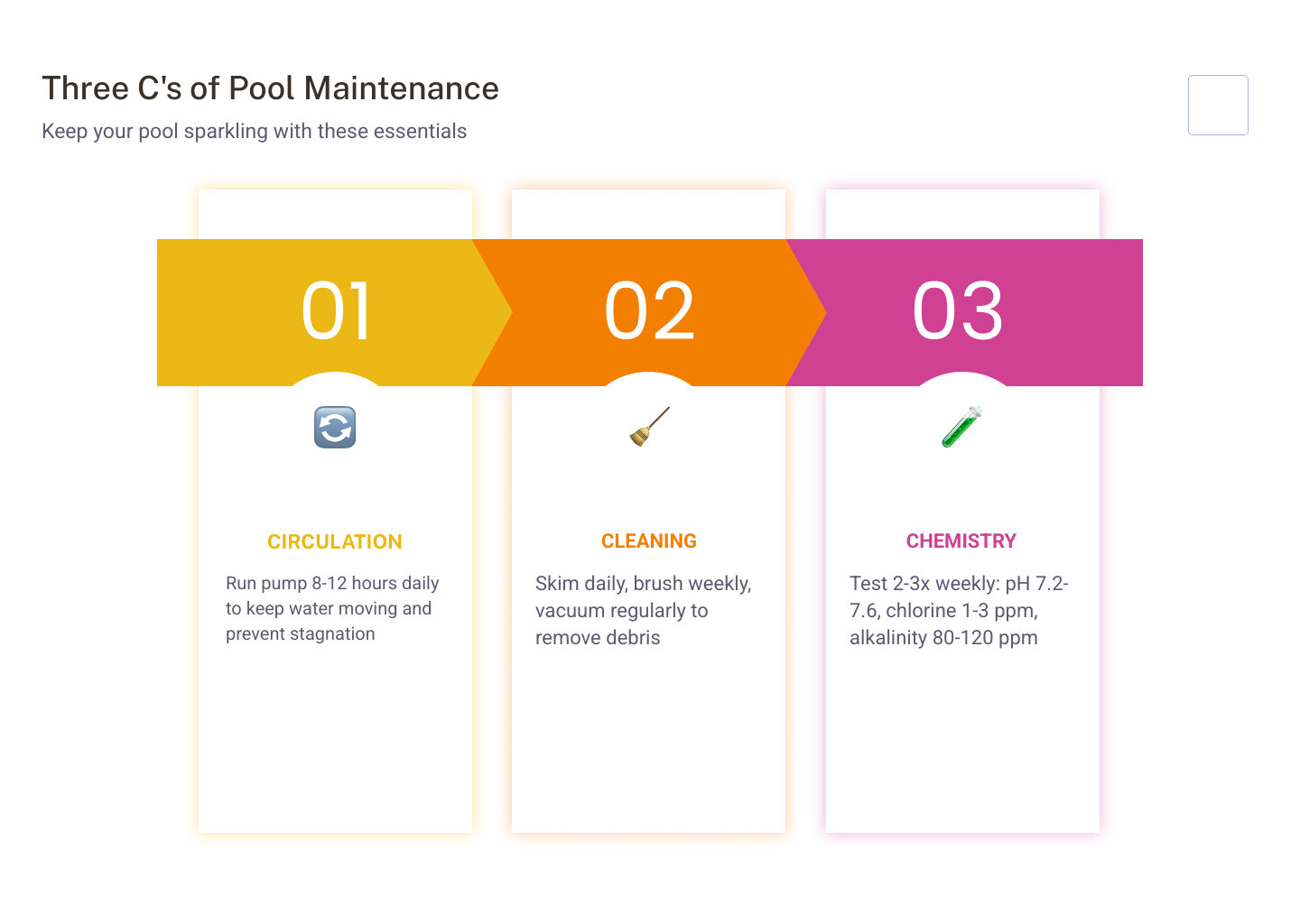
Pool pros often talk about the Three C’s of pool maintenance:
- Circulation — water that moves stays cleaner
- Cleaning — regular skimming, brushing, and vacuuming remove debris before it becomes a problem
- Chemistry — balanced water protects swimmers and your equipment
Get those three things right on a regular schedule, and you’ll spend less time fighting problems and more time enjoying your backyard.
Relevant articles related to how to clean pool:
Essential Tools for How to Clean Pool Success
Before you roll up your sleeves, you need the right gear. Think of these as your “pool cleaning toolkit.” Most of these tools attach to a single telescopic pole, which is the Swiss Army knife of pool maintenance.
- Skimmer Net: This is for the surface. You’ll use it to scoop up leaves, bugs, and that one stray basketball before they sink to the bottom.
- Pool Brush: Brushing is the most underrated part of how to clean pool surfaces. It knocks loose algae and “biofilm” that vacuums can’t suck up. Use a nylon brush for vinyl or fiberglass and a stainless steel brush for plaster or gunite.
- Vacuum Head and Hose: Whether manual or automatic, this is how you get the heavy stuff off the floor.
- Water Test Kit: You can’t manage what you don’t measure. A liquid drop kit or high-quality digital tester is generally more accurate than paper strips.
- Sanitizers and Chemicals: You’ll need chlorine (tabs or liquid), pH increaser/decreaser, and alkalinity balancer on hand.
Don’t forget the heart of your system! Keeping your equipment clear is just as vital as the water itself. For a deep dive on keeping your hardware happy, check out our guide: dont be a basket case easy steps to a clean pool pump.
The Three C’s: Circulation, Cleaning, and Chemistry
If you remember nothing else about how to clean pool water, remember the Three C’s. They are the pillars of a healthy backyard retreat.
1. Circulation
Stagnant water is an invitation for algae. Your pump should run for about 8 to 12 hours each day. In the heat of a Houston summer, leaning toward 12 hours is a smart move. This ensures all the water in your pool passes through the filter at least once (a “turnover”).
2. Cleaning
This is the “elbow grease” part. Even with the best filter, debris will find its way in. According to How to Clean a Pool: A Step-by-Step Homeowners’ Guide, regular skimming prevents organic matter from breaking down and clouding your water.
3. Chemistry
This is the science of safety. We’re looking for a “Goldilocks” zone—not too acidic, not too alkaline.
- pH: 7.2 to 7.6 (similar to the pH of human eyes!)
- Chlorine: 1 to 3 ppm
- Alkalinity: 80 to 120 ppm
Step-by-Step Routine for How to Clean Pool Surfaces
Maintaining a pool is 80% routine and 20% knowledge. If you stay on top of it, the “big cleans” become a thing of the past.
- Daily Skimming: Take five minutes every morning to skim the surface. It’s therapeutic, and it keeps your skimmer baskets from overflowing.
- Weekly Brushing: Scrub the walls, steps, and ladders. Pay extra attention to “dead spots” behind ladders or in tight corners where water doesn’t circulate well.
- Vacuuming: You can do this manually, which is like “mowing the lawn underwater,” or let technology do the work.
- Robotic Cleaners: These are a game-changer for busy Houston families. Unlike suction cleaners, they have their own internal filters and don’t put extra stress on your pump system.
Mastering Water Chemistry and How to Clean Pool Filters
Your filter is the unsung hero of your pool. It works 24/7 to trap particles you can’t even see. But eventually, that “trap” gets full. You’ll know it’s time to clean the filter when the pressure gauge reads 10 PSI higher than its “clean” baseline.
- Sand Filters: These require “backwashing,” which reverses the water flow to flush out dirt.
- Cartridge Filters: You’ll need to remove the large pleated filters and hose them down. For the best results, see our cartridge filter cleaning a splash tastic guide to crystal clear water.
- DE Filters: These use a fine powder to filter out microscopic debris. They require backwashing and then “recharging” with new DE powder through the skimmer.
Advanced Care: Shocking and Vacuum-Free Methods
Sometimes, a standard clean isn’t enough. If you’ve just had a big Fourth of July BBQ or a classic Gulf Coast thunderstorm, you likely need to “shock” the pool.
Pool Shocking (Superchlorination): This means adding a heavy dose of chlorine to “burn off” contaminants like sunscreen, sweat, and nitrogen.
- Do it at night: The sun’s UV rays will burn off unstabilized chlorine before it can do its job.
- Safety first: Always wear gloves and goggles. Add chemicals to water, never water to chemicals to avoid splashes.
- Wait to swim: According to How to Clean a Pool and Keep the Water Safe, you should wait at least 8 to 12 hours after a chlorine shock before jumping back in.
Cleaning Without a Vacuum: If your vacuum is on the fritz, don’t panic. You can use a flocculant to clump fine particles together so they sink to the bottom. Once they are clumped, you can brush them toward the main drain or use a “siphon” method with a garden hose to pull the debris out.
For those stubborn stains on the “waterline” or tiles, we recommend muriatic magic unlocking the secret to clean pool tiles. It’s a powerful way to keep that custom tile work looking brand new.
Seasonal Maintenance and Common Fixes
In places like Fulshear, Katy, and The Woodlands, we don’t really “close” pools like they do up North. However, we do have seasonal shifts.
- Spring Opening: This is the time for a “deep clean.” Check all your seals, O-rings, and hardware.
- Fall Leaf Management: As the oaks and pecans start dropping, you may need to skim twice a day and empty baskets frequently to prevent clogs.
- Winterizing: Even if we don’t freeze often, you should still balance your chemicals and consider a pool cover to keep debris out during the “off-season.”
Troubleshooting Common Issues
| Problem | Likely Cause | Fix |
|---|---|---|
| Cloudy Water | Poor filtration or low chlorine | Clean filter, check pump runtime, and shock |
| Green Water | Algae bloom | Brush walls, shock heavily, and run pump 24/7 |
| Foaming | Low calcium or “soap” from suits | Test calcium levels; add calcium chloride |
| Strong Chlorine Smell | Chloramines (spent chlorine) | Counter-intuitively, you need to add shock to break them down |
To keep your investment in top shape for decades, read our guide on how to keep your custom pool looking brand new year after year.
DIY vs. Professional Maintenance Costs
| Service Item | DIY Monthly Estimate | Professional Monthly Estimate |
|---|---|---|
| Chemicals | $40 – $80 | Included in service |
| Equipment/Tools | $150 (initial setup) | Included in service |
| Labor Time | 4 – 8 hours | 0 hours |
| Total Monthly | $60 – $100 | $150 – $250 |
Frequently Asked Questions about Pool Cleaning
How do I clean the bottom of my pool without a vacuum?
The best way is to use a pool brush to push all debris toward the main drain. If the particles are very fine, use a pool flocculant to clump them together first. You can also use a garden hose to create a manual siphon for small areas of sand or dirt.
How often should I shock my swimming pool?
Typically, once a week is a good rhythm. However, you should always shock after a heavy rainstorm (which alters pH and introduces debris), a pool party with many swimmers, or if you notice the water looks a bit “dull.”
What are the most common pool cleaning mistakes?
The “Big Three” mistakes are:
- Running the pump too little: Trying to save on electricity often leads to expensive algae bills.
- Ignoring the filter pressure: A dirty filter is like trying to breathe through a straw.
- Adding chemicals to the skimmer: This can damage your pump and heater over time. Always dissolve chemicals in a bucket of water first (if required) and pour them around the perimeter.
Keeping Your Houston Oasis Sparkling
At Ocean Blue Pools, we believe a pool should be a source of joy, not a chore. For over 25 years, we’ve been helping families in Houston, Cypress, Sugar Land, and across the Greater Houston area build the backyards of their dreams.
Whether you’re looking for a brand-new custom build or you’re ready to breathe new life into an older space, we’re here to help with Southern-friendly service and expert craftsmanship. Maintaining a pool is about protecting the place where your family makes memories—the BBQs, the birthday parties, and those quiet Sunday afternoons.
Ready to transform your backyard or give your current pool a fresh start? We’d love to chat. More info about pool remodeling services