Why Clean Pool Tile Matters for Your Houston Backyard
Clean pool tile is essential for keeping your swimming pool looking beautiful and inviting. Here’s what you need to know to get started:
Quick Answer: How to Clean Pool Tile
- For light buildup: Use a soft brush with a vinegar and water solution (equal parts), scrub gently, and rinse
- For moderate calcium deposits: Make a baking soda paste, apply to stains, scrub with a nylon brush, and rinse thoroughly
- For stubborn scale: Use a pumice stone on wet tiles (ceramic/porcelain only) or a specialized pool tile cleaner
- For heavy calcium deposits: Consider muriatic acid (with extreme caution) or professional bead blasting
Prevention: Maintain pH at 7.4-7.6, brush tiles weekly, and balance your water chemistry regularly
That beautiful shimmer on your pool tile is the signature of a well-loved backyard oasis. But over time, waterline scum, chalky white scale, and stubborn stains can start to dull that sparkle—especially in our Houston climate.
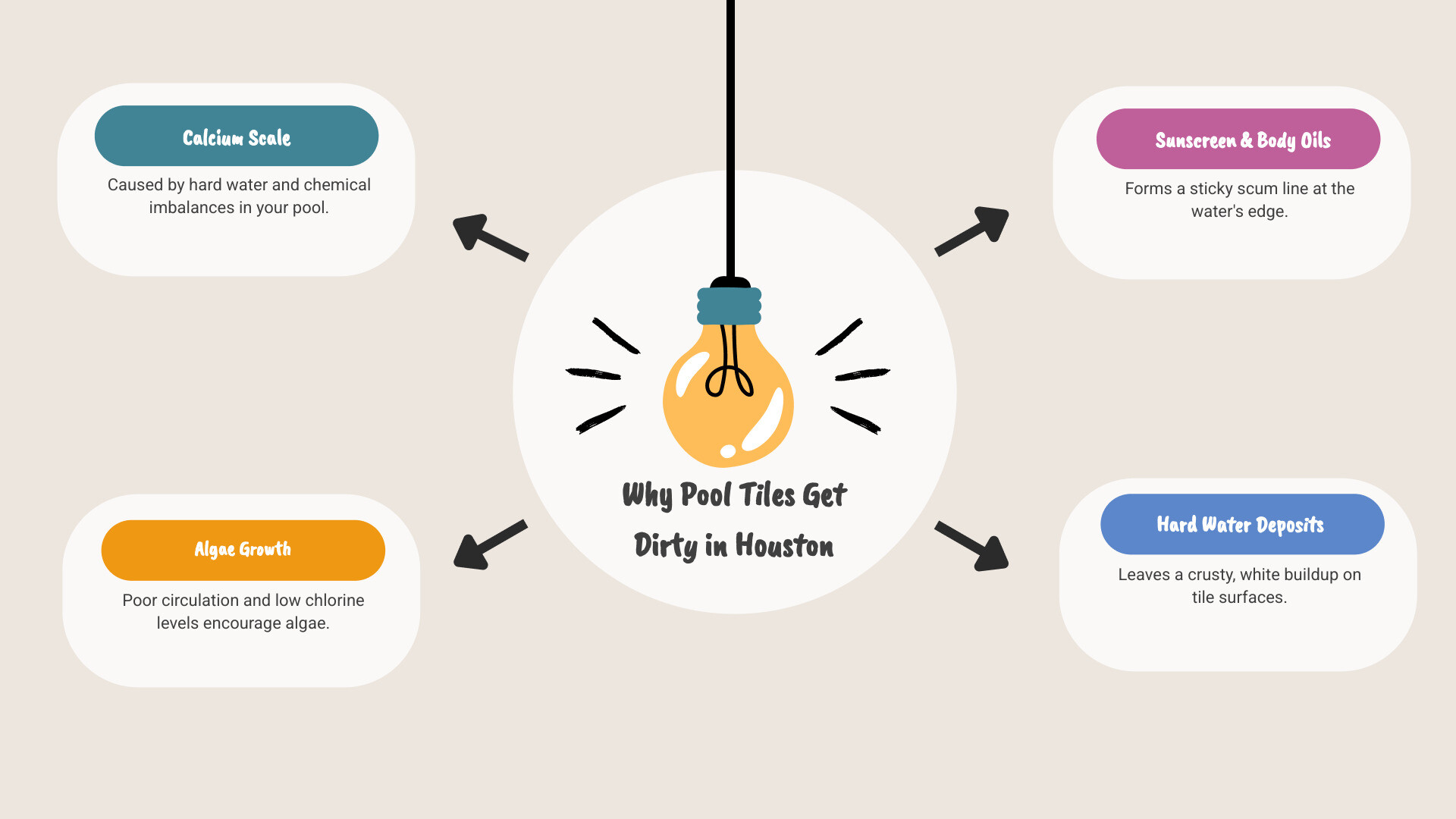
Here’s the truth: our hard water, hot summers, and high evaporation rates create the perfect conditions for calcium buildup and mineral deposits. Add sunscreen, body oils, and the occasional algae bloom, and your once-gleaming tiles can start to look tired.
The good news? Most tile cleaning doesn’t require expensive chemicals or professional help. With the right approach and a little elbow grease, you can restore that fresh-from-the-builder shine.
This guide will walk you through everything you need to know to clean pool tile effectively—from simple weekly scrubs to more powerful solutions for tough buildup. We’ll cover what causes those stains, which tools work best, and when it’s time to call in the pros.
Whether you’re dealing with light waterline scum or heavy calcium scale that’s been building for years, we’ve got you covered.
First, Know Your Tiles and What’s Staining Them
Before you start scrubbing, it’s important to know what you’re working with. Different tile materials and stains require different cleaning methods. Understanding your pool’s surfaces is the first step to getting them sparkling clean.
Common Pool Tile Types
In the Greater Houston area, we see a variety of pool tiles, each with its own cleaning needs:
- Ceramic Tiles: Durable, smooth, and stain-resistant, these are a popular, low-maintenance choice.
- Porcelain Tiles: Even more durable and less porous than ceramic, porcelain is highly resistant to water absorption, making it an excellent choice for pools.
- Glass Tiles: Chosen for vibrant color, glass tiles are stunning but can be prone to mineral deposits. You’ll need to be gentle to avoid scratching the surface.
- Natural Stone Tiles: Materials like travertine or limestone offer a luxurious look but are porous and susceptible to staining from harsh chemicals. Sealing is a must.
- Mosaic Tiles: Often decorative, these can be made from any material. Their smaller size means more grout lines, which can harbor algae if not cared for.
Identifying Stains
The type of stain dictates the cleaning method. Here are the usual suspects:
- Calcium Carbonate (Flaky, White): The most common issue, appearing as a white, crusty deposit at the waterline. It’s caused by high pH, high alkalinity, and our region’s hard water and high evaporation rates.
- Calcium Silicate (Hard, Grayish): A tougher form of calcium buildup that looks like a grayish, knotted rope on tiles. It’s harder to remove and often requires more aggressive methods.
- Algae Buildup (Green or Black): Slimy green or black patches on tiles and grout, which thrive when chlorine is low and temperatures are warm.
- Organic Stains (from Leaves/Debris): Brownish or greenish stains left by organic matter. These are usually easier to remove than mineral deposits.
- Sunscreen and Oil Residue: A greasy, yellowish film around the waterline from body oils, sunscreens, and lotions.
Understanding your stains and tile material will help you choose the safest, most effective cleaning approach. For more insights on building a beautiful pool from the ground up, explore our guide on quality pool construction.
Your Toolkit for Tackling Tile Grime
Having the right tools on hand makes the job a whole lot easier, and a bit safer too! You likely have some of these essentials already tucked away, and the rest are easy to find at your local hardware store or pool supply shop. Just like a carpenter has their trusty hammer, we’ve got our go-to items for sparkling tiles.
Essential Tools
- Soft-bristle Brush: Your everyday hero for weekly brushing and light scum. It’s gentle enough for all tile types, including delicate glass, and helps prevent buildup before it gets stubborn.
- Stiff Nylon Brush: For tougher grime on ceramic and porcelain tiles, a stiff nylon brush (not wire, which can scratch) provides more scrubbing power.
- Pumice Stone: This natural abrasive is a miracle worker for stubborn calcium deposits on ceramic and porcelain tiles. Just remember to always keep both the stone and the tile wet to avoid scratching. We generally advise against using it on glass or very soft natural stone.
- Grout Brush or Old Toothbrush: Perfect for getting into those tight grout lines where algae and dirt love to hide. An old toothbrush is surprisingly effective for detailed work!
- Bucket: Essential for mixing your cleaning solutions.
- Rubber Gloves: Protect your hands from cleaning solutions and pool water.
- Safety Goggles: A must-have when dealing with any chemicals, even mild ones, to protect your eyes from splashes.
DIY Cleaning Solutions
Often, the best solutions are simple ones you can whip up at home.
- White Vinegar: A fantastic natural acid that excels at dissolving light calcium carbonate deposits. We often recommend a 50/50 mixture with water.
- Baking Soda: This gentle abrasive is great for creating a paste that can scrub away grime and light stains without scratching. It’s also a mild alkali, which can help with some organic buildup.
- Specialized Pool-Safe Tile Cleaner: For those times when DIY isn’t quite cutting it, there are many commercial cleaners specifically designed for pool tiles. Look for non-acidic calcium removers or pool-safe degreasers that won’t affect your pool’s pH or promote algae growth. Always check the label to ensure it’s safe for your specific tile type.
A Step-by-Step Guide to Clean Pool Tile
Ready to get those tiles looking like new? Here’s our straightforward process, starting with the gentlest methods first. We believe in tackling problems with the least aggressive approach that gets the job done.
Lowering the Water Level
For a thorough cleaning of your waterline, you’ll often need to lower your pool’s water level. This makes cleaning solutions more effective. We recommend dropping the water 4-6 inches below the affected tiles by running your pool pump to waste or using a siphon. Remember to turn off your automatic pool cleaner before you start.
Weekly Brushing Routine
Prevention is the best medicine for keeping your clean pool tile looking its best. Make it a habit to brush your pool tiles weekly with a soft-bristle brush. This simple step dislodges any new algae or mineral deposits before they can set in and reduces the need for more intensive cleaning later.
Simple DIY Solutions for Everyday Buildup
For light scum and early mineral deposits, a homemade cleaner is often all you need. It’s gentle, effective, and uses items you probably already have.
- Vinegar and Water Spray: White vinegar is a natural hero for dissolving flaky white calcium carbonate. Mix equal parts white vinegar and water in a spray bottle. Spray the solution on the tiles, let it sit for 10-15 minutes, then scrub with a soft-bristle brush and rinse thoroughly.
- Baking Soda Paste: Baking soda is a gentle abrasive that lifts away grime and oily films without scratching. Mix baking soda with just enough water to form a thick paste. Apply it to the stains, let it sit for a few minutes, scrub with a nylon brush, and rinse completely.
Cleaning Grout and Tougher Stains
Grout lines are porous and can easily collect dirt and algae. Use a baking soda paste and an old toothbrush to scrub the lines. For tougher stains on ceramic or porcelain, a pumice stone can work wonders. Always keep both the stone and the tile wet to avoid scratching. For greasy films, a pool-safe degreaser is a great choice.
After any cleaning, a thorough rinse is essential to remove all cleaning agents and loosened grime. For more tips on keeping your pool pristine, check out our guide on how to keep your custom pool looking brand new year after year.
When to Use Muriatic Acid to Clean Pool Tile
For heavy, stubborn calcium deposits that don’t budge with gentler methods, muriatic acid can be an effective solution. However, we cannot stress this enough: this is a powerful chemical that demands respect and extremely careful handling. Using it improperly can cause serious damage to your pool, property, and yourself.
Safety First
When working with muriatic acid, personal safety is paramount. Always wear:
- Protective Gear: Heavy-duty rubber gloves, safety goggles or a face shield, long sleeves, long pants, and a respirator mask to protect against fumes.
- Proper Ventilation: Ensure you’re working in a well-ventilated area.
- Keep Water Nearby: Have a garden hose running to quickly dilute any spills.
Proper Mixing and Application
This is a critical safety rule: ALWAYS add acid to water, NEVER water to acid. Adding water to concentrated acid can cause a dangerous reaction.
- Ratio: A common mix is one part muriatic acid to ten parts water.
- Application: Wet the tiles first. Using an acid-safe brush, carefully apply the diluted solution to a small section of buildup. Scrub gently; you should see the calcium bubble and dissolve. Work in small sections and rinse thoroughly before moving to the next.
Neutralizing the Area
After rinsing, neutralize any residual acid by sprinkling baking soda over the area, letting it sit, and rinsing again.
Muriatic acid should be a last resort for very heavy calcium deposits. The risks are significant, and we strongly recommend trying all other methods first.
Calling in the Pros for the Toughest Jobs
Sometimes, a stain is just too tough for DIY efforts, or you might not feel comfortable handling strong chemicals. That’s when calling a professional is the smartest move.
- Bead Blasting for Heavy Scale: This professional method uses specialized equipment to blast a fine, abrasive medium (like baking soda or glass beads) at high pressure onto the tiles. It effectively removes years of stubborn calcium buildup without damaging the tile surface and is a much safer alternative to DIY acid for significant scale.
- Professional Acid Washing: This is a comprehensive process that often involves draining the pool and is best left to pros who have the experience and safety protocols to handle highly corrosive chemicals safely.
- Stubborn Calcium Silicate Removal: This tough, grayish buildup is much harder than calcium carbonate and often requires professional tools and expertise to remove without damaging tiles.
- Protecting Your Investment: Professionals use techniques designed to minimize damage and extend the life of your tile. If you’re facing a heavy-duty cleaning project, don’t hesitate to reach out to a trusted pool service provider. For a more extensive change, we invite you to learn about professional pool remodeling with Ocean Blue Pools.
Keeping Your Tiles Sparkling: Prevention is Key
The easiest way to deal with tile stains is to prevent them from forming in the first place. A little regular maintenance goes a long way in keeping your clean pool tile looking pristine. Prevention is always better (and cheaper!) than a cure.
Maintaining Water Chemistry
Balanced water chemistry is the most important step, especially in the Greater Houston area where our water can be hard. It prevents the mineral deposits and algae growth that cause tile buildup.
- Ideal pH Levels (7.4-7.6): Keeping your pH in this range is key. High pH encourages calcium scale, while low pH can cause corrosion.
- Total Alkalinity (80-120 ppm): Alkalinity acts as a buffer, helping to keep your pH stable and preventing wild fluctuations.
- Calcium Hardness: Too much dissolved calcium (especially with high pH) is a primary cause of buildup. Maintaining optimal levels is important. Professionals use the Langelier Saturation Index (LSI) to ensure water is perfectly balanced.
- Chlorine Levels: Proper chlorine levels are essential for preventing algae from growing on tiles and grout.
Regularly testing your water and making adjustments is the cornerstone of tile prevention. You can find more detailed information at Tile Care, Water Balance & General Maintenance .
Regular Brushing Schedule
We recommend brushing your pool tiles weekly with a soft-bristle brush. This simple act dislodges new mineral deposits and algae before they can stick to the surface. It’s a quick task that prevents stubborn stains later on.
Using a Pool Cover
A pool cover is a game-changer for tile maintenance, especially during our hot months.
- Reduces Evaporation: Less evaporation means less hard water residue left behind on your tiles.
- Keeps Debris Out: A cover prevents leaves and dirt from entering your pool, which cause organic stains and feed algae.
- Maintains Water Temperature: Regulating water temperature can slow chemical reactions that lead to scale and algae.
By implementing these preventative measures, you’ll spend less time scrubbing and more time enjoying your beautiful, clean pool.
Frequently Asked Questions about Cleaning Pool Tile
We hear a lot of great questions from our Houston neighbors about keeping their pool tiles pristine. Here are some of the most common ones, answered with our friendly, expert advice.
How often should I clean my pool tiles?
We recommend brushing your tiles weekly as part of your regular pool care to dislodge minor buildup. For a more thorough cleaning, tackle your tiles at least once a month, or anytime you see buildup forming at the waterline. A deep clean at the beginning and end of the pool season is also a great habit to keep your tiles in top shape.
Can I use a pumice stone on my pool tile?
Yes, but with caution. A pumice stone is a fantastic tool for scrubbing tough calcium deposits on ceramic or porcelain tile. However, it can scratch softer surfaces like glass tile. To minimize any risk, always keep both the pumice stone and the tile surface wet while scrubbing. Work gently and test it on a small, inconspicuous area first to ensure it’s safe for your tile.
What are the risks of using harsh chemicals like muriatic acid?
Muriatic acid carries significant risks and should be handled with extreme caution. It is highly corrosive and can cause serious skin and eye burns, and its fumes can cause respiratory irritation. Beyond personal safety, it can also damage your pool by etching tile glaze, corroding grout, and harming surrounding deck materials if not used perfectly. For these reasons, we always recommend trying gentler methods first. If you’re facing very heavy scale, we strongly suggest considering a professional service. Their expertise and equipment can achieve superior results safely, protecting both you and your pool.
A Beautiful Pool Starts with a Little Care
Keeping your pool tiles clean not only makes your pool look inviting but also helps protect your investment for years of family fun. It’s about maintaining that vibrant sparkle that makes your backyard oasis truly special, especially after we’ve poured our craftsmanship into creating it for you. By understanding your tiles, using the right methods, and staying on top of water chemistry, you can ensure your backyard always looks its absolute best.
At Ocean Blue Pools, we believe in building beautiful, high-quality pools that are a joy to own and a centerpiece for making lasting memories. With a little regular care, you can keep that dreamscape looking brand new, ready for every splash and sunny afternoon. We’re proud to be Houston’s trusted pool builder, and we’re always here to help you enjoy your custom pool to the fullest.
Ready to transform your pool? Explore our pool remodeling services.