Sloped Backyard Pool Options: What Every Houston Homeowner Needs to Know
Backyard pools on a slope are absolutely possible — but the slope has to be dealt with the right way before a single drop of water goes in.
Here’s the short answer most homeowners are looking for:
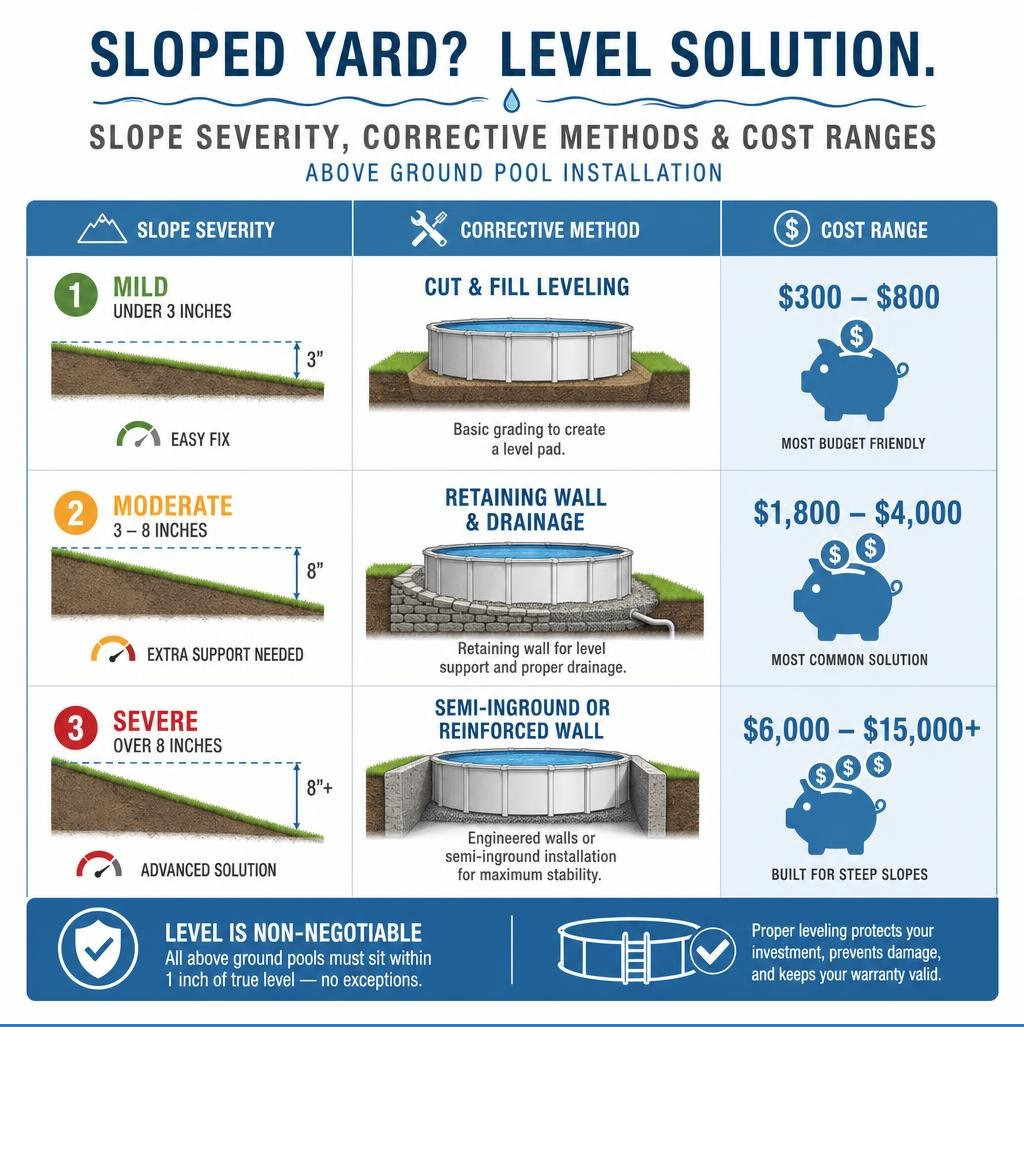
- Any slope under 3 inches across the pool footprint can usually be corrected with basic cut-and-fill leveling ($300–$800).
- Slopes of 3–8 inches typically need a retaining wall and proper drainage ($1,800–$4,000).
- Slopes over 8 inches often call for a semi-inground pool or reinforced concrete walls ($6,000–$15,000+).
- Every pool must sit within 1 inch of true level — no exceptions, or you risk wall failure and a voided warranty.
- Standard pool kits cannot be buried in a slope without risking collapse. Semi-inground options are built for that.
The good news? A sloped yard doesn’t have to kill your pool dreams. With the right method, it can actually create a stunning, resort-style backyard that a flat yard simply can’t match.
This guide walks you through everything — slope limits, leveling methods, pool types, real costs, and the mistakes that turn a manageable project into an expensive headache. I’m Kyle Becker, and with over 25 years helping Houston families build their dream backyards, I’ve seen every kind of slope challenge imaginable — and found a solution for every one of them.
Sloped backyard pool planning helpful reading:
Can You Safely Install a Pool on a Sloped Backyard?
Yes, you can absolutely install a pool on a slope, but you cannot simply prop up one side of the pool frame to make it fit the hill. The pool structure itself must rest on a completely flat, solid foundation.
Water is incredibly heavy. To put it in perspective, a standard 24-foot round pool holds about 14,000 gallons of water. That water weighs roughly 116,000 pounds. If your site is unlevel, that immense weight shifts toward the downhill side, creating uneven pressure that pool walls are not designed to handle.
For a safe installation, the pool base must be level within a strict 1-inch tolerance across its entire footprint. When we evaluate properties in areas like Sugar Land or Cypress, we look closely at how the slope impacts the overall structural integrity of the soil and the pool frame before we begin any grading work.
What Happens If a Pool Is Not Level?
When a pool is out of level by more than an inch, the physical forces at play can quickly turn a backyard paradise into a costly disaster. The shifting water weight concentrates hydrostatic pressure on the lower wall. This causes the pool wall to bow outward, the vinyl liner to stretch unevenly and tear, and in worst-case scenarios, the entire structure to collapse.
A sudden wall burst can release thousands of gallons of water in seconds, washing away landscaping and potentially damaging your home’s foundation. To prevent this, proper ground preparation is non-negotiable. If you want to learn more about the basic mechanics of preparing a flat base, you can read about How to Level a Pool Site.
Maximum Slope Limits for Sloped Backyard Pool Projects
Most pool manufacturers only warranty their products when installed on a slope differential of 6 to 8 inches or less before professional site correction. The Association of Pool & Spa Professionals (PHTA) standards require the pool base to be level within 1 inch.
If your yard has a steeper drop—such as a 10% to 15% gradient—you must use advanced excavation or structural retaining methods to create a flat pad. Measuring your slope accurately using a transit or laser level is the very first step. For homeowners looking to understand the fundamentals of site preparation, you can check out this guide on How to Grade a Yard for Drainage and Construction.
The Three Best Methods for Installing a Pool on a Slope
When dealing with a sloped yard, we use three primary methods to create a safe, level pad. The right choice depends on the severity of your slope, your budget, and how you want the finished project to look.
Method 1: Cut and Fill Leveling
The most common way to level a mild slope is the “cut and fill” method. A common mistake is building up the low side with loose dirt. Loose soil will compress under the weight of the pool, causing it to sink and tilt. Instead, you must always cut down the high side of the slope to meet the level of the low side.
Once the high side is excavated down to solid mineral soil, any minor fill used on the low side must be compacted in 2-inch layers using a commercial plate compactor to reach a 95% soil density rating. To understand why proper compaction is so vital for preventing sinkage, take a look at these Soil Compaction Basics for Home Projects.
Method 2: Retaining Wall Construction
For moderate slopes, a retaining wall is necessary to hold back the earth on the high side of the pool and prevent soil erosion from washing mud into your clean water. The wall must be built at least 3 feet away from the pool edge to prevent lateral soil pressure from pushing against the pool frame.
A proper retaining wall must also include a dedicated drainage system. We install a perforated 4-inch French drain pipe surrounded by clean gravel behind the wall to route rainwater away from the pool base. Without this, hydrostatic pressure from trapped water can cause the wall to buckle. For more on integrating structural elements into your yard, read A Practical Guide to Custom Pool Design.
Method 3: Semi-Inground Installation
A semi-inground installation is often the best solution for steep slopes. Instead of building a massive, expensive retaining wall, we sink the pool partially into the hillside. The pool is buried deep on the uphill side and sits completely above ground on the downhill side.
This hybrid approach requires a pool specifically engineered with thick aluminum or resin panels to withstand the active lateral pressure of the surrounding earth. Once the pool is in place, we backfill the excavated gap with crushed stone to ensure stable support and excellent drainage. To learn more about how these pools work, read about Understanding Semi-Inground Pool Options.
Choosing the Best Pool Types and Estimating Costs
Selecting the right materials is just as important as the installation method. Standard steel-walled pool kits can rust if they stay in constant contact with damp soil, making them a poor choice for sloped installations where earth is close to the pool frame.
| Pool Type | Slope Suitability | Soil & Corrosion Resistance | Average Kit Cost |
|---|---|---|---|
| All-Steel Wall | Flat or very mild slopes only | Low (prone to rust if buried or wet) | $2,500 – $5,000 |
| Resin / Hybrid | Mild to moderate slopes | High (will not rust or corrode) | $4,500 – $8,500 |
| Semi-Inground | Moderate to severe slopes | Excellent (engineered for earth contact) | $6,000 – $16,000 |
Why Semi-Inground and Resin Pools Excel on Slopes
Resin and semi-inground pools are the clear winners for challenging terrains. Resin does not rust, corrode, or degrade when exposed to soil moisture, which is highly beneficial in the humid climates of Fulshear, Katy, and Pearland.
Semi-inground models are engineered with robust, heavy-duty walls designed to resist the constant inward pressure of backfill soil when buried. They offer the premium look of an inground pool at a fraction of the cost, blending beautifully with multi-level wooden decks or stone patios.
Cost Estimates by Slope Severity
The total cost of installing a pool on a slope depends largely on the earthwork and retaining structures required:
- Mild Slope (Under 3 inches): $300 to $800. This covers basic site marking, turf removal, and minor excavation to cut down the high side.
- Moderate Slope (3 to 8 inches): $1,800 to $4,000. This includes professional grading and building a basic gravity block retaining wall with a French drain system.
- Severe Slope (Over 8 inches): $6,000 to $15,000+. This requires deep excavation, reinforced concrete or engineered retaining walls, or upgrading to a premium semi-inground pool kit with a concrete collar.
For a deeper dive into how these excavation and site prep costs fit into your overall backyard budget, check out our guide on Splash or Splurge: Navigating Pool Construction Costs in Houston.
Common Mistakes to Avoid with Sloped Backyard Pool Sites
Over our 25 years in the Houston area, we have repaired many DIY installations that went wrong. Here are the most common mistakes to avoid:
- Leaving organic material under the pool: If you do not remove grass, roots, and topsoil, they will rot over time. This causes the ground to settle, leaving dangerous divots under your pool liner.
- Using local clay soil as fill: Houston is famous for its “black gumbo” clay soil. This clay expands up to 10% when wet and shrinks when dry, making it highly unstable. Always use clean masonry sand or crushed stone for your pool base.
- Neglecting drainage: Rainwater flowing down a slope will pool against your pool’s uphill wall if you do not install a French drain to redirect it.
- Backfilling a standard pool: Trying to bury a standard pool kit will cause the walls to cave inward when you drain the pool for a liner change.
Before starting your project, it is wise to review our essential checklist: How to Plan a Pool Installation: Tips for Homeowners.
Frequently Asked Questions About Sloped Yard Pools
Do I need a retaining wall for my pool on a hill?
If your slope has a drop of more than 6 inches across the pool site, you will need a retaining wall on the uphill side. The wall prevents soil erosion from washing dirt against the pool wall and keeps the high side of the hill from collapsing. Always pair the wall with a French drain to handle heavy Texas rainstorms.
Can I partially bury a pool to deal with a slope?
You can only bury a pool if the manufacturer explicitly states the model is rated for partial burial or semi-inground use. Burying a standard pool kit voids the warranty and risks structural collapse because the walls are not designed to handle the lateral pressure of the surrounding earth.
Should I hire a professional or can I install the pool myself on a slope?
While a handy homeowner can handle a flat-site install, correcting a sloped yard requires specialized excavation equipment, precise laser leveling, and an understanding of soil mechanics. Hiring a professional ensure the site is graded correctly, saving you from a costly reinstall if the pool shifts or leaks down the road.
Your Partner in Backyard Transformations
At Ocean Blue Pools, we believe a challenging yard is simply an opportunity to build something extraordinary. Whether you live in the rolling hills of Montgomery County, the wooded lots of The Woodlands and Magnolia, or the expanding communities of Richmond and Sugar Land, we bring over 25 years of local craftsmanship to every project.
We handle everything from precise site grading and engineered retaining walls to beautiful custom decking that turns your sloped yard into a multi-level outdoor retreat. Let us take the stress out of the engineering so you can focus on making memories with your family.
Ready to transform your backyard? Build Your Dream Pool with us today.