Your Guide to a Dream Backyard Patio
Hardscape patio design transforms a simple backyard into a beautiful, functional outdoor living space that you and your family will enjoy for decades. Whether you’re dreaming of a cozy spot for morning coffee or a stunning entertainment area for weekend barbecues, the right hardscape creates the foundation for how you’ll use your outdoor space.
Quick Answer: Essential Elements of Hardscape Patio Design
- Choose Your Materials – Pavers, natural stone, concrete, or brick
- Plan Your Layout – Consider size, shape, and connection to your home
- Ensure Proper Drainage – Slope away from the house, manage water runoff
- Select Your Style – Modern, traditional, rustic, or Mediterranean
- Add Features – Outdoor kitchens, fire pits, seating walls, or water features
- Prepare the Site – Excavation, base layers, edge restraints
- Maintain Regularly – Cleaning, sealing, and joint sand replacement
A great patio is the heart of your backyard. It’s where you sip your morning coffee, host summer barbecues, and relax under the stars. Hardscaping—the patios, walkways, and walls that form the foundation of your outdoor living area—is what turns a simple patch of grass into a true extension of your home.
The outdoor living industry has seen tremendous growth as homeowners invest in their backyards to improve lifestyle and property value. With billions spent annually on hardscape projects, the options for creating your perfect outdoor space have never been more exciting.
This guide will walk you through everything you need to know to design a hardscape patio that’s not only beautiful but built to last for years of enjoyment. From selecting durable materials suited to Houston’s climate to incorporating features like outdoor kitchens and fire pits, we’ll cover the planning, design, and installation considerations that make the difference between a good patio and a great one.
Hardscape patio design further reading:
Choosing Your Foundation: A Guide to Patio Materials
The material you choose sets the entire tone for your patio. It’s about finding the right balance between the look you love, the durability you need for our Houston climate, and your budget. Let’s break down the most popular choices.
Pavers vs. Poured Concrete: What’s the Right Choice for You?
When planning a new patio, one of the first decisions you’ll face is between pavers and poured concrete. Both have their merits, and the best choice often depends on your priorities for aesthetics, budget, and maintenance.
Poured concrete can certainly make a great patio base, offering versatility in finishes like stamping to mimic other materials. However, concrete pavers often require less work for installation and provide a solid, durable surface underfoot. Here’s a quick comparison:
| Feature | Concrete Pavers | Poured Concrete |
|---|---|---|
| Design Flexibility | Wide range of colors, shapes, and patterns; easier to customize layouts. | Can be stamped or stained, but less adaptable to complex patterns or future changes. |
| Durability & Repair | Individual units less prone to cracking; easy to replace damaged sections. | Prone to cracking from ground movement; repairs often involve patching, which can be noticeable. |
| Installation | Generally quicker for small areas; DIY-friendly for some projects. | Requires professional pouring and finishing; curing time needed before use. |
| Long-Term Cost | Higher initial material cost; lower long-term repair costs due to individual unit replacement. | Lower initial material cost; potentially higher long-term repair costs due to full slab replacement or extensive patching. |
While poured concrete might seem more economical upfront, concrete pavers are less prone to cracking from our local Houston soil shifts and are much easier to repair if a section ever gets damaged. This can save you time and money over the lifespan of your patio.
Exploring Paver & Slab Options for Your Hardscape Patio Design
Beyond the pavers versus poured concrete debate, there’s a whole world of options to consider for your hardscape patio design.
- Concrete Pavers: These are a fantastic choice for their versatility, durability, and wide array of colors and textures. From smooth, minimalist designs to those mimicking natural stone, concrete pavers can suit almost any aesthetic. They’re also quite durable, making them a smart choice for our Houston weather.
- Natural Stone: For a truly luxurious and timeless look, natural stone like bluestone, flagstone, or travertine is exceptional. Travertine, in particular, is a great option for our climate. It’s beautiful, incredibly durable, and notably heat-resistant, meaning it stays cooler underfoot even on the hottest Houston days. Its porous nature also helps it absorb water quickly, providing a naturally non-slip surface. While generally the most expensive option, natural stone adds undeniable sophistication.
- Brick: If you appreciate a classic, old-world charm, brick pavers are a wonderful choice. They offer a warm, inviting aesthetic and can last for over a century if installed correctly. The rich colors and traditional patterns, like herringbone, can add significant character to your outdoor space.
- Slabs: Larger format slabs offer a clean, contemporary aesthetic, especially popular in modern luxury designs. These are essentially larger versions of pavers, providing a sleek, expansive look with fewer joint lines.
- Large-Format Slabs: The trend for large-format slabs continues to grow for those seeking bold, innovative outdoor layouts. Products like the Melia DuraFusion Slab or Artforms modular panel systems create a striking, modern appearance. They minimize grout lines, contributing to a seamless, expansive feel that can make a patio appear larger and more sophisticated.
- Textured vs. Smooth Surfaces: The surface finish of your pavers or slabs significantly impacts both aesthetics and functionality. Textured surfaces, like those found in weathered stone pavers, offer a rustic charm and often provide better slip resistance, which is an important safety consideration, especially around pools or in areas prone to dampness. Smooth surfaces, such as the Catalina Grana collection, offer crisp, clean lines and a minimalist look, ideal for contemporary designs. The choice often comes down to your desired style and the intended use of the patio.
- Hardscape Design Ideas from HGTV
- Uniquely Shaped Pavers: Don’t feel limited to squares and rectangles! Trapezoidal or other uniquely shaped pavers, like the Vertex Slab, offer incredible design possibilities. They allow for intricate laying patterns, curves, and custom designs that can truly make your patio a one-of-a-kind masterpiece.
Eco-Friendly Hardscaping Solutions
We’re always looking for ways to create beautiful outdoor spaces while being mindful of our environment. Here are a few eco-friendly options for your hardscape patio design:
- Permeable Pavers: These innovative pavers are designed with larger gaps or specific structures that allow rainwater to drain directly into the subsoil below, rather than running off into storm drains. This helps prevent surface flooding, replenishes groundwater, and reduces strain on municipal drainage systems—a smart choice for managing water runoff in our area.
- Recycled Materials: Some composite pavers are made almost exclusively from recycled materials, giving new life to waste products and reducing demand for virgin resources. Choosing these materials contributes to a more sustainable build.
- Local Sourcing: While not always possible for all materials, opting for locally sourced stone or aggregates reduces transportation emissions and supports our local economy.
- Water Runoff Management: Beyond permeable pavers, integrating features like rain gardens or catch basins into your landscape design can help manage water runoff from your patio, directing it to where it can be absorbed by plants or collected for later use in watering your garden.
Planning and Designing Your Perfect Patio
A great design doesn’t happen by accident. It starts with a thoughtful plan that considers how you’ll use the space and how it connects to your home and landscape. This is where your vision starts to take solid form. We always encourage our clients to think about their patio as an extension of their indoor living space—a place for family gatherings, quiet relaxation, and entertaining friends.
Before we even break ground, we like to “live” with the idea. We can outline the perimeter with stakes and string, or even landscaper’s spray paint. Spending a few days with this outline can help you confirm the location and size, considering factors like sun exposure and potential debris from nearby trees.
How to Create a Cohesive Hardscape Patio Design
A successful hardscape patio design integrates seamlessly with your home and existing landscape, creating a harmonious outdoor environment.
- Matching Home Architecture: The materials and style you choose for your patio should complement your home’s architectural style. For instance, brick is often seen in traditional homes, while natural stone or terra-cotta tile pairs beautifully with Mediterranean designs. Concrete’s versatility means it works well with almost any space and style. The goal is for your patio to feel like an organic addition, not an afterthought.
- Landscape Integration: Think about your entire outdoor area, not just the patio itself. How will the patio connect to your garden beds, walkways, or even a future pool? Integrating greenery along the edges of your hardscaping helps soften the transitions and creates a more natural, inviting feel. We often incorporate biophilic design principles, using natural textures and interspersing pavers with elements like artificial turf or garden beds to bring nature closer.
- Defining Outdoor Rooms: Just like inside your home, you can create distinct “rooms” outdoors. Building up with step treads and retaining walls can help define these areas, perhaps an liftd space for an outdoor kitchen and dining, or a lower, more intimate area for a fire pit. Establishing a clear focal point, such as a fire feature or a water feature, gives the design purpose and draws the eye.
- Scale and Proportion: Ensure that your patio elements are in proportion with the overall landscape and your home. A massive patio might overwhelm a small backyard, while a tiny one could get lost in a large space. We aim for a balanced design that feels right for your property.
- Design an Outdoor Space
Mastering Layouts and Laying Patterns
The way pavers are laid can dramatically change the look and feel of your patio. Different patterns offer distinct visual effects, from classic to contemporary.
- Herringbone Pattern: This classic pattern, where pavers are laid in a zigzag, creates a strong, interlocking bond that’s very durable. It’s also visually dynamic and adds a touch of sophistication.
- Running Bond: A simple yet neat pattern where pavers are laid in offset rows. It’s versatile and works well for most patio styles.
- Basket Weave: This pattern creates a checkerboard effect, often used for a more traditional or rustic look.
- Circular Patterns: Incorporating a circular pattern, perhaps around a fire pit or a central design element, can add a beautiful focal point and break up linear spaces. We’ve seen stunning results using combinations like Dublin Cobble and Holland Stone to create an inset circle.
- Using Borders and Inlays: Don’t forget the power of borders and inlays! A contrasting paver color or texture used as a border can frame your patio beautifully. A double soldier course, for example, can add definition and elegance to your design. You can even create patterned “rugs” with different pavers to define seating areas.
Essential Site Prep and Installation Considerations
The success and longevity of your hardscape patio design depend heavily on proper site preparation and installation. This is where craftsmanship truly shines.
- Site Assessment: Before digging, we thoroughly assess the site. This includes checking for underground utilities (always call 811 before you dig!), understanding the sun’s path throughout the day, and noting any large trees or bushes that might drop debris or affect drainage.
- Proper Drainage: This is perhaps the most critical aspect, especially with our Houston rainfall. Ignoring drainage requirements is the most common reason hardscapes fail. We ensure your patio is graded with a slight slope—typically 1/8 to 1/4 inch per foot—directing water away from your home and any structures. On our heavy clay soils, which don’t drain well, a substantial base layer and careful grading are paramount to prevent pooling.
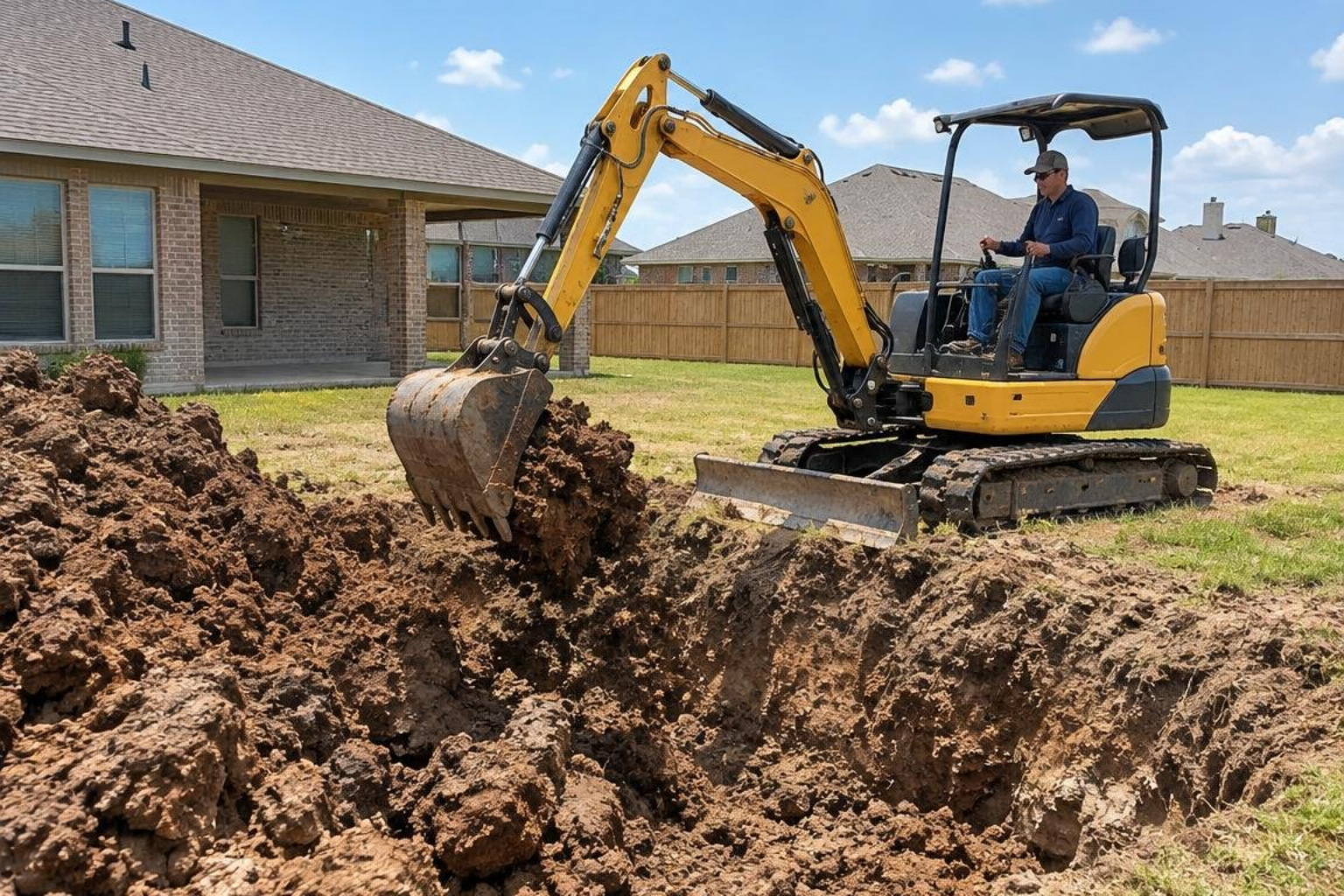
- Base Preparation: A well-prepared base is the backbone of a durable patio. This usually involves excavating the site to a depth of at least 6 inches (more in areas with significant freeze-thaw cycles, though less of a concern in Houston). The subgrade is then compacted to at least 95% to prevent settling. We often lay geotextile fabric for added stability, followed by a layer of compacted gravel (typically 4 to 6 inches deep) and then about 2 inches of sand for the setting bed. This meticulous layering prevents future settling or heaving.
- Edge Restraints: These unsung heroes are vital! Edge restraints, usually made of plastic, aluminum, or concrete, are installed around the perimeter of your patio to hold the base material in place and prevent the outside pavers from shifting or tipping. Without them, your beautiful pattern could start to creep and create unsightly gaps.
- Building a Patio guide
Bringing Your Vision to Life: Styles and Features
This is the fun part—adding the features and stylistic touches that make your patio uniquely yours. Whether you dream of a rustic retreat or a sleek, modern entertainment hub, the right elements can bring your vision to life. This is where we transform a functional space into a personal oasis.
Popular Patio Design Styles
Your hardscape patio design can reflect any number of aesthetic preferences. Here are a few popular styles and their key elements:
- Modern: Characterized by clean lines, geometric shapes, and a minimalist approach. Think large-format slabs, neutral color palettes (grays, whites, blacks), and smooth surfaces. Furniture is often sleek and understated.
- Contemporary: Similar to modern but often more fluid and reflective of current trends. It might incorporate unique textures, curved elements, and a blend of natural and manufactured materials.
- Traditional: Accepts classic elements like brick pavers, symmetrical layouts, and perhaps a more ornate feel. Materials often include brick, natural stone in warmer tones, and classic patterns.
- Rustic: Evokes a natural, earthy feel. This style often uses natural stone with rougher textures, irregular shapes, and warm, muted colors. Wooden accents and natural landscaping are common.
- Mediterranean: Inspired by the sunny coasts of the Mediterranean, this style often features stone or terra-cotta tiles, warm color schemes, and lush, drought-tolerant plantings. Courtyards, fountains, and stucco elements are characteristic.
Incorporating High-Impact Features
To truly lift your patio from functional to fabulous, consider incorporating these high-impact features:
- Outdoor Kitchens: An outdoor kitchen makes your patio the ultimate entertaining hub. Imagine grilling and preparing meals al fresco, without having to run back inside. We can design custom outdoor kitchens with built-in grills, refrigerators, sinks, and even pizza ovens, all seamlessly integrated into your hardscape with durable wall products and countertops.
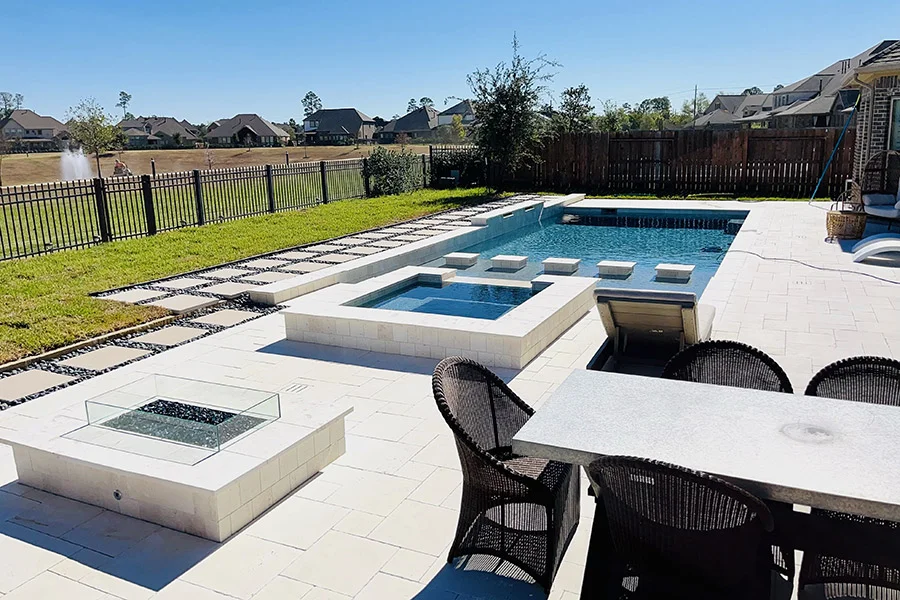
- Fire Pits: A fire pit creates an inviting focal point and extends the usability of your patio into cooler evenings. It’s perfect for gathering with family and friends, sharing stories, and even roasting marshmallows. Whether it’s a simple, neat bowl or a custom-built stone structure with seating walls, a fire pit adds warmth and ambiance.
- Fireplaces: For a touch of indoor warmth and charm brought outdoors, a custom outdoor fireplace is a magnificent addition. It creates a grand focal point and a cozy atmosphere, perfect for relaxing with a good book or enjoying intimate conversations.
- Water Features: The sight and sound of flowing water are incredibly calming. Incorporating a water feature, like a soothing fountain or a modern water wall, can transform your patio into a tranquil retreat. These can be integrated directly into your hardscape design, adding a serene element.
- Built-in Seating Walls: Combining functionality with aesthetics, built-in seating walls offer permanent, comfortable seating around your patio, often complementing a fire pit or outdoor kitchen. They define spaces and create a cohesive look.
- Modern Luxury Outdoor Kitchen
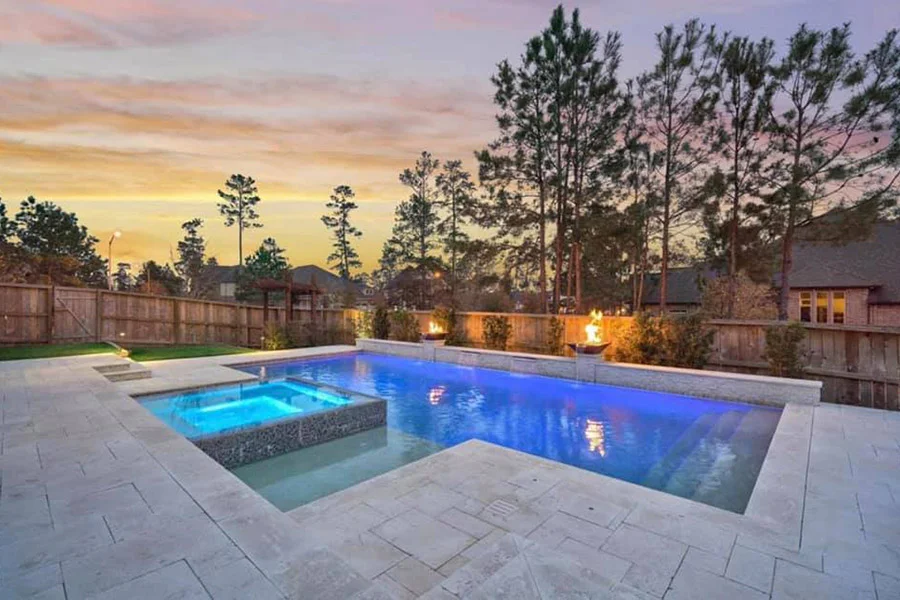
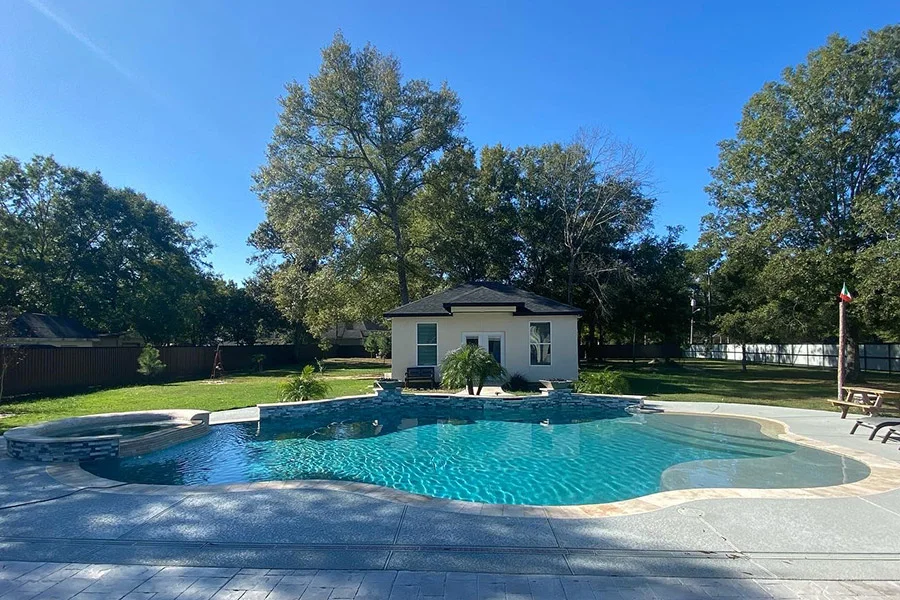
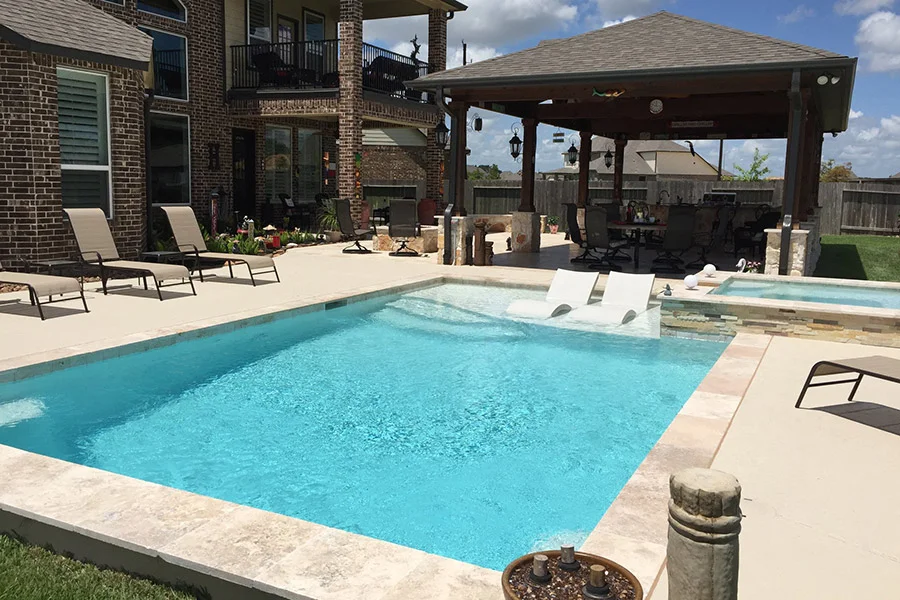
- Custom Pools: As custom pool builders, we often integrate patios directly with pools. Features like tanning ledges (or sun shelves) offer a shallow area for lounging, while beach entries and zero entries provide gradual, accessible access to the pool, mimicking a natural shoreline. These elements are designed to blend seamlessly with your chosen patio materials, ensuring a cohesive and luxurious outdoor living space.
Keeping Your Patio Picture-Perfect: Maintenance and Care
A well-built hardscape patio is incredibly durable, but a little routine care will keep it looking its best for decades. Protecting your investment is simple with these straightforward maintenance tips.
Routine Cleaning and Stain Removal
Regular cleaning is the easiest way to maintain your patio’s beauty.
- Sweeping: A quick sweep with a stiff broom regularly will remove loose dirt, leaves, and debris.
- Rinsing: Periodically rinse your patio with a garden hose to remove accumulated grime.
- Gentle Cleaners: For tougher dirt, a mild detergent (like dish soap) and a stiff brush can work wonders. Always avoid wire brushes, as they can damage pavers and leave scratch marks.
- Removing Organic Stains: For stains from leaves, berries, or mildew, a solution of water and a mild bleach alternative or specialized organic stain remover can be effective. Always test in an inconspicuous area first.
- Tackling Grease and Oil: For barbecue grease or oil spills, act quickly. Absorb as much as possible with paper towels, then use a degreasing cleaner specifically designed for hardscapes.
Sealing, Sanding, and Long-Term Upkeep
For long-term protection and appeal, a few extra steps go a long way.
- Benefits of Sealing: Applying a penetrating sealer is your patio’s best defense against staining, minor spills, and environmental damage. It helps prevent color fading from the sun, inhibits algae growth, and protects against acid erosion and salt damage. This preserves the natural beauty of your pavers or stone.
- When to Reseal: We generally recommend reapplying a sealer every three to five years, depending on the type of material, sealer used, and exposure to elements. Consult with your installer or material supplier for specific recommendations.
- Topping Off Joint Sand: Over time, the sand between your pavers can wash away or settle. Replenishing this joint sand (especially with polymeric sand, which hardens) is important. It prevents weeds from sprouting, deters ants, and helps keep your pavers from shifting.
- Repairing Minor Cracks or Sunken Pavers: One of the great advantages of pavers and natural stone is the ease of repair. If an individual paver or stone cracks or settles, it’s typically much simpler to remove and replace that single unit than to repair a large crack in a poured concrete slab. For sunken pavers, we can lift them, adjust the setting bed, and then reset them to be level again.
Ready to Build? Finding a Pro and Starting Your Project
Turning your dream patio into a reality requires craftsmanship and expertise. While some folks enjoy a DIY challenge, hiring a qualified professional ensures your project is built to the highest standards, especially for complex designs involving pools, kitchens, or drainage solutions. A trusted builder manages the entire process, from design to final walkthrough, giving you peace of mind. For a project that truly transforms your backyard, you can count on the team at Ocean Blue Pools to deliver exceptional quality and service.
We pride ourselves on our end-to-end project management, ensuring clear communication and a smooth experience from your initial vision to the final touches. Our team of skilled craftsmen understands the nuances of working with our local Houston climate and soil conditions, guaranteeing a durable and beautiful result.
Our Process outlines how we work with you to bring your outdoor living dreams to life. If you’re considering a new patio or an entire backyard change, we’re here to help. Schedule a free consultation with us to discuss your ideas, get honest answers to your questions, and receive a detailed quote. Let’s design and build an outdoor space that improves your lifestyle and creates lasting memories for your family.
Start designing your dream outdoor living space today!