Why Pool Replastering Houston Homeowners Rely On Matters More Than You Think
Pool replastering Houston is the process of removing your pool’s worn-out interior surface and applying a fresh new finish — and for most concrete or gunite pools, it’s something you’ll need to do every 10 to 15 years.
Here’s a quick snapshot of what you need to know:
| Question | Quick Answer |
|---|---|
| What is pool replastering? | Applying a new interior finish to a concrete or gunite pool |
| How often is it needed? | Every 10–15 years (sometimes as soon as 7 years in harsh conditions) |
| Common signs it’s time | Rough surface, stains, etching, pitting, or visible cracks |
| Best finish for Houston? | Pebble-based finishes (15–20+ year lifespan) |
| How long does it take? | Most projects take 2–6 weeks from drain to swim |
| Can you swim during curing? | Yes, after refill and proper chemical balancing |
If your pool feels like sandpaper underfoot, looks stained no matter how much you clean it, or is showing cracks and patches — your plaster is telling you something.
Greater Houston has tens of thousands of pools built in the 1980s, 1990s, and early 2000s. Many of those surfaces are well past their prime. And here in Houston, the long swim season, intense summer heat, and clay-heavy soil can speed up wear faster than in other parts of the country.
The good news? A replastering project doesn’t just fix problems. It transforms your backyard. A fresh, smooth surface changes how the water looks, how it feels, and how much you’ll enjoy spending time out there.
In this guide, we’ll walk you through everything — from spotting the early warning signs, to choosing the right finish for our Houston climate, to understanding what the process actually looks like from start to finish.
Pool replastering Houston terms to learn:
Understanding Pool Replastering Houston: When and Why It’s Time
When we talk about concrete and gunite pools, the plaster isn’t just there for looks. It acts as a vital protective barrier between your pool water and the structural shell. Without a healthy layer of plaster, water can seep into the porous gunite, leading to leaks and compromising the structural integrity of your backyard investment.
As we move into April 2026, many homeowners in areas like Katy, Sugar Land, and The Woodlands are looking at pools that have weathered several decades of Texas sun. Over time, water chemistry, UV exposure, and simple age cause that protective layer to thin, etch, and degrade. Knowing everything a Houston pool remodeling specialist can do for your backyard starts with understanding that the surface is the foundation of your pool’s health.
How Often Should You Replaster Your Houston Pool?
The big question we often hear is: “How long is this supposed to last?” Generally, pools should be replastered every 10 to 15 years. However, depending on the materials used and how well the water chemistry has been maintained, that window can range anywhere from 7 to 20 years.
In Houston, our swim season is exceptionally long—often lasting 7 to 8 months. This means your pool’s surface is working harder for more of the year than a pool in the North. Frequent use, combined with the chemical demand of keeping water clear in 100-degree heat, can lead to faster surface wear. Investing in a timely refresh ensures your pool remains a safe, beautiful place for your family. You might wonder, is pool remodeling worth the investment? When you consider the ROI and long-term savings on chemicals and repairs, the answer is a resounding yes.
Why Houston’s Climate Impacts Your Pool Surface
Houston presents a unique set of challenges for pool owners. Our hot summers and high humidity create a high chemical demand, which can be tough on traditional white plaster. Furthermore, the expansive clay soil common in Harris and Fort Bend counties is known for shifting. This “ground heave” can cause subtle shell movement, leading to spider cracks or delamination in older, brittle plaster.
By choosing our professional pool remodeling services in Houston, you’re ensuring that the materials and techniques used are specifically suited to handle the local soil conditions and environmental stressors.
Common Signs Your Pool Surface Needs a Refresh
How do you know it’s actually time to call in the pros? Your pool usually leaves plenty of clues. The most common complaint we hear is a rough texture. If your kids are coming out of the pool with scraped toes or snagged swimsuits, the plaster has likely “etched,” leaving behind a sandpaper-like surface.
Other red flags include:
- Mineral Stains: Stubborn copper or iron stains that won’t budge with scrubbing.
- Discoloration: Blotchy patches or a yellowing/graying of the original white finish.
- Algae Traps: Pits and valleys in the plaster where algae loves to hide, making it impossible to keep the pool clear.
Understanding the most common problems with old pools and how remodeling fixes them can help you decide if a simple repair will suffice or if a full replaster is necessary.
Identifying Structural vs. Cosmetic Issues
It’s important to distinguish between a surface that’s just “ugly” and one that is failing structurally. If you see patches of dark gray showing through—that’s exposed gunite. This is an urgent issue, as the shell is no longer protected. Similarly, if you’re losing more water than can be explained by evaporation, or if you see large cracks, you may be dealing with a plumbing leak or a structural crack. A comprehensive inground pool remodel addresses these deep-seated issues before they become catastrophic.
The “Swamp to Sanctuary” Transformation
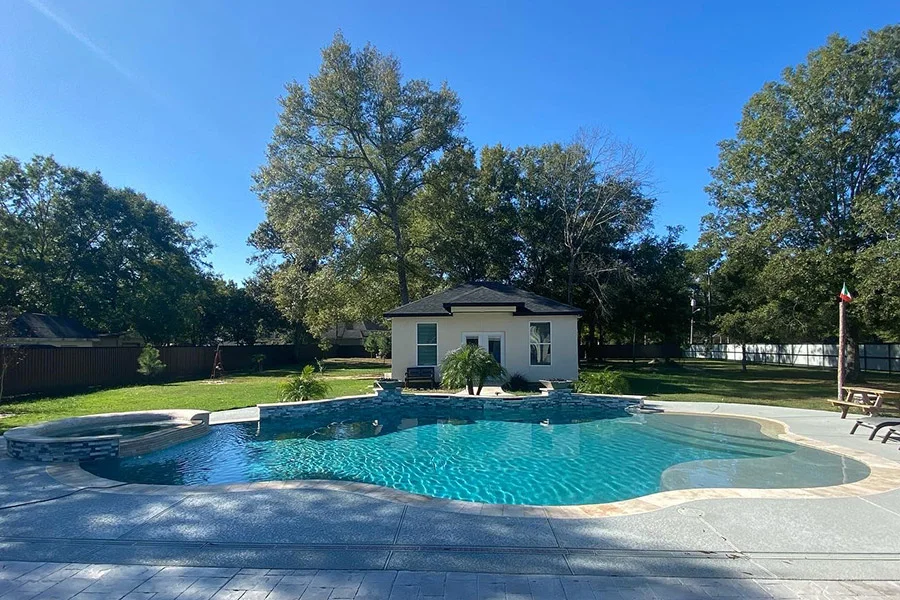
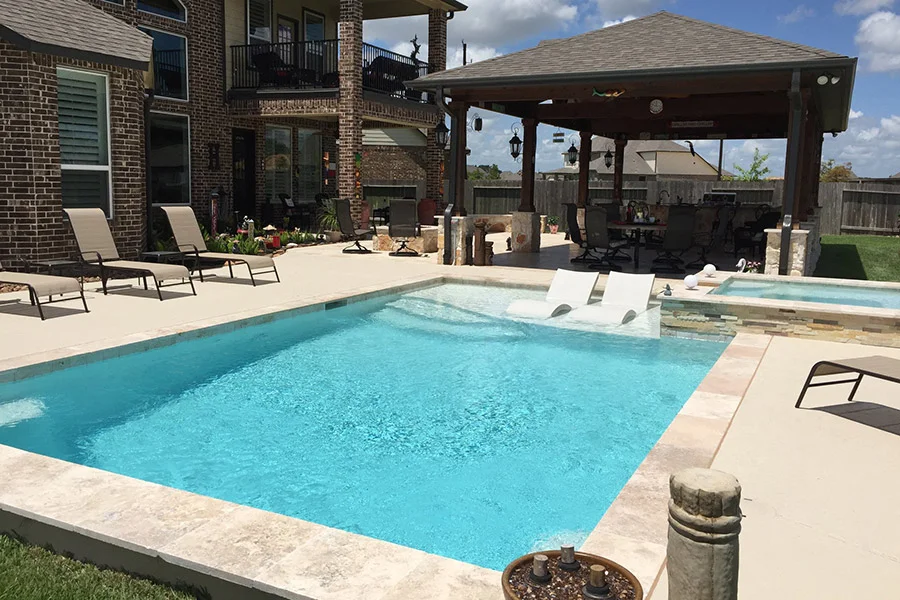
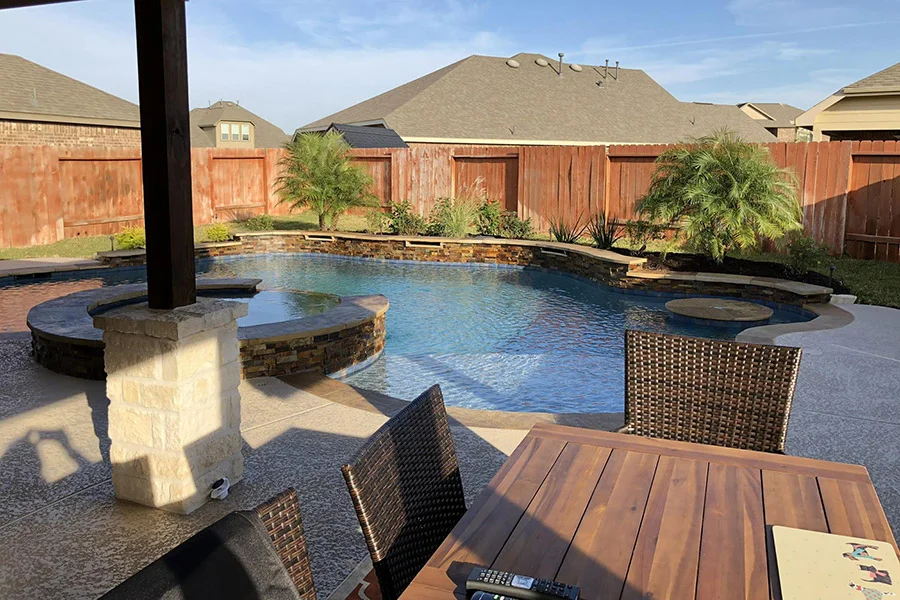
There is nothing quite like the “before and after” of a replastering project. We love taking a pool that has become a “backyard eyesore” and turning it back into a sanctuary. Beyond the personal enjoyment, a fresh surface significantly boosts your home’s marketability. In pool-heavy communities like Cypress or The Woodlands, a dated, rough pool can actually decrease home value, whereas a modern, shimmering finish makes the property stand out. Read more about our favorite Houston pool renovations: from swamp to sanctuary stories to see what’s possible.
Choosing the Best Finish for the Houston Climate
Today, you have more options than just the traditional white plaster of the 1980s. Choosing the right material is the biggest factor in how long your new surface will last.
| Finish Type | Durability | Average Lifespan | Feel |
|---|---|---|---|
| Standard White Plaster | Moderate | 7–10 Years | Very Smooth |
| Quartz Aggregate | High | 10–12 Years | Smooth/Polished |
| Pebble Finishes | Highest | 15–20+ Years | Textured/Slip-resistant |
Pebble and Quartz: Durable Options for Pool Replastering Houston
For our Houston neighbors, we highly recommend pebble-based finishes like StoneScapes or PebbleTec. These are currently the most popular renovation choices in the area for a reason. Because they use tiny, smoothed river pebbles or glass beads, they are incredibly resistant to chemical fluctuations and the harsh Texas sun.
Pebble finishes offer a 15–20+ year lifespan, making them a “once-in-a-generation” upgrade for many homeowners. They also provide natural slip-resistance on steps and tanning ledges. If you’re looking for inspiration, check out these inground pool renovation ideas to see how different finishes look in real backyards.
Modern Aesthetics and Water Color
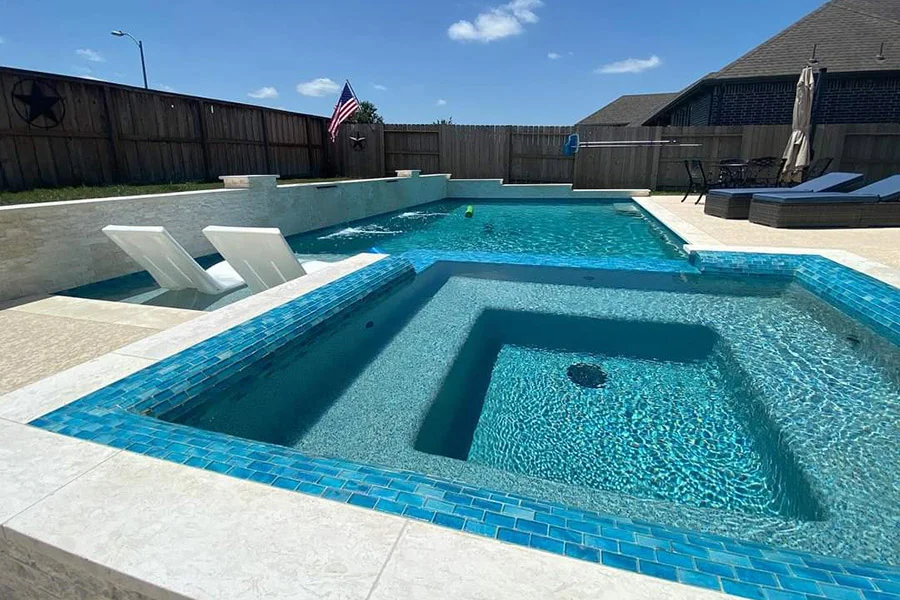
The finish you choose dictates the color of your water. While white plaster gives you that classic “light blue” look, modern finishes like polished marble or Hydrazzo can create vibrant blues, deep teals, or even a lagoon-like appearance.
The Step-by-Step Process: What to Expect During Your Project
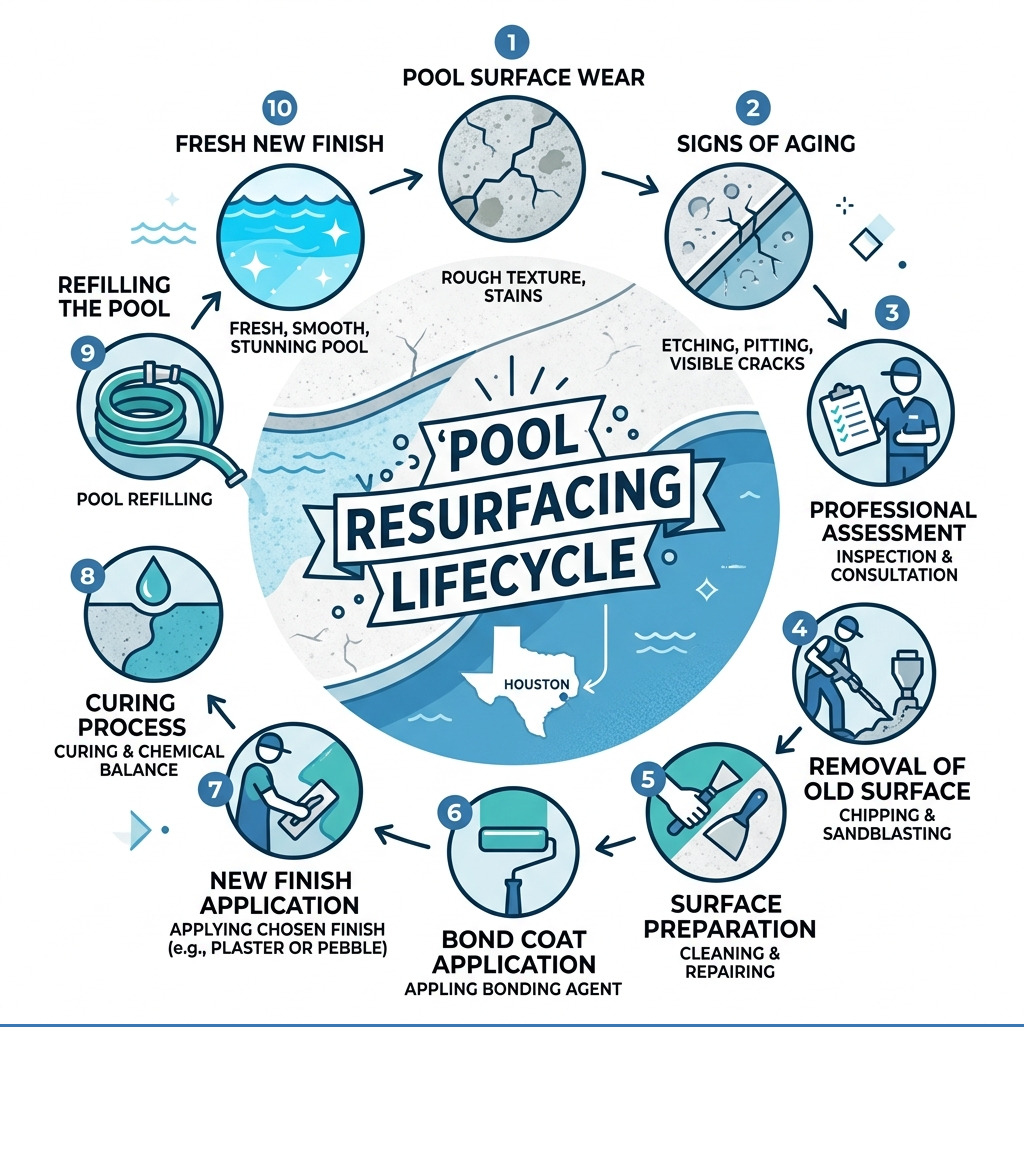
We believe in transparency, so you should know exactly what happens once our crews arrive at your home. A typical pool replastering Houston project follows these five phases:
- Drainage and Inspection: We safely drain the pool and perform a hydrostatic pressure relief by drilling small holes in the floor to prevent the pool from “floating” in Houston’s high water table.
- Surface Preparation: We remove loose plaster and “chip out” around the tile line and fittings. A bond coat is applied to ensure the new finish sticks perfectly to the old shell.
- Application: Our skilled craftsmen hand-trowel the new finish across the entire pool surface.
- Curing and Finishing: Depending on the finish (like pebble), we may acid-wash or power-wash the surface to expose the beautiful textures.
- Refill and Startup: The pool is refilled immediately. This is a critical stage where water chemistry must be balanced daily to protect the “green” plaster.
Preparing Your Property and Post-Care Maintenance
Before we begin, we ask that you clear away patio furniture, toys, and decor from the pool area. For the safety of your furry family members, please keep pets indoors while our crews are working and ensure we have clear gate access.
Once the pool is full, the real work for the homeowner (or your service pro) begins. For the first 30 days, the new plaster will release “plaster dust.” You’ll need to brush the pool walls and floor daily to ensure the finish cures smoothly and the dust is caught by your filter. This is also why we recommend reading our guide to pool remodeling costs to understand how maintenance fits into your overall budget.
Professional Application and Curing
During the application, we install new anti-vortex plates on your main drains to meet modern safety standards. It’s a small detail, but it’s part of our commitment to quality. Once the plaster is on, the pool must be filled without stopping—if the water stops halfway, it can leave a permanent “ring” on the new finish.
Estimating the Cost of Pool Replastering in Houston
The cost of your project depends on three main things: the size of your pool (an average Houston pool is about 30,000 gallons), the condition of the existing shell, and the finish you choose.
While basic resurfacing starts in the low five figures, a comprehensive renovation that includes new tile and high-end pebble finishes can range higher. For a detailed breakdown of what factors affect the cost of pool remodeling, we always recommend an on-site consultation.
Additional Upgrades to Consider
Since the pool is already drained, this is the most cost-effective time to tackle other repairs. Many of our clients choose to combine replastering with:
- Waterline Tile Replacement: If you’re changing your plaster color, your old tile might not match.
- Coping and Decking: Repairing cracked coping or resurfacing a tired Kool Deck.
- Equipment Upgrades: Swapping out old, loud pumps for modern, efficient models.
For more information on the cost to redo an inground pool, including these add-ons, we provide transparent estimates tailored to your specific needs.
Long-Term ROI and Energy Savings
One of the smartest moves you can make during a renovation is upgrading to a variable-speed pump. These pumps use up to 90% less electricity than old single-speed models. In Houston, where we run our pumps nearly year-round, these units often pay for themselves in just 2 to 3 years. It’s an easy way to turn a cosmetic project into a long-term money-saver.
Frequently Asked Questions about Houston Pool Resurfacing
Can I add a spa or tanning ledge during the replastering process?
Yes! Since we are already working on the shell, this is the perfect time for structural enhancements. We can tie a new tanning ledge or spa into your existing pool shell with a seamless connection, completely changing how you use your pool.
How long will my pool be out of commission?
Most basic replastering jobs take 1 to 2 weeks, but more comprehensive renovations can take 2 to 6 weeks. This depends on the weather (rain can delay plaster application) and the complexity of the project.
Do I need to replace my waterline tile at the same time?
Not necessarily. We use a “saw cut” technique to chip the old plaster away just below the tile line, leaving your existing tile intact. However, if your tile is cracked or looks dated, most homeowners find it’s worth the extra investment to replace it while the pool is empty for an aesthetic match.
Transform Your Backyard with Expert Craftsmanship
At Ocean Blue Pools, we’ve spent over 25 years serving the Greater Houston area, from Fulshear to The Woodlands. We understand that your pool is more than just a hole in the ground—it’s where your family makes memories, where you host summer BBQs, and where you go to relax after a long Texas day.
Our team takes pride in providing southern-friendly service and trusted craftsmanship. We manage your project from end-to-end, ensuring that your pool replastering Houston project is handled with the precision it deserves.
Ready to revitalize your outdoor space and turn that “swamp” back into a sanctuary?
Schedule your free pool remodeling consultation with Ocean Blue Pools today.